An interview with Rector Pavel Moiseev about how TSU manages to compete with leading Russian universities on the international stage.
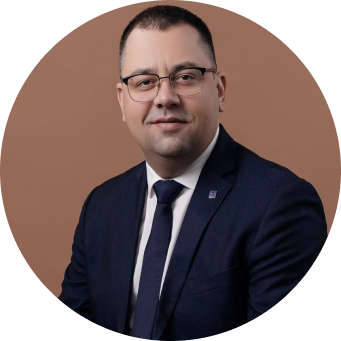
Pavel MoiseevRector of Derzhavin Tambov State University |

Nataliia BurlinovaPresident of the Center for Creative Diplomacy, Associate Professor at the Financial University |
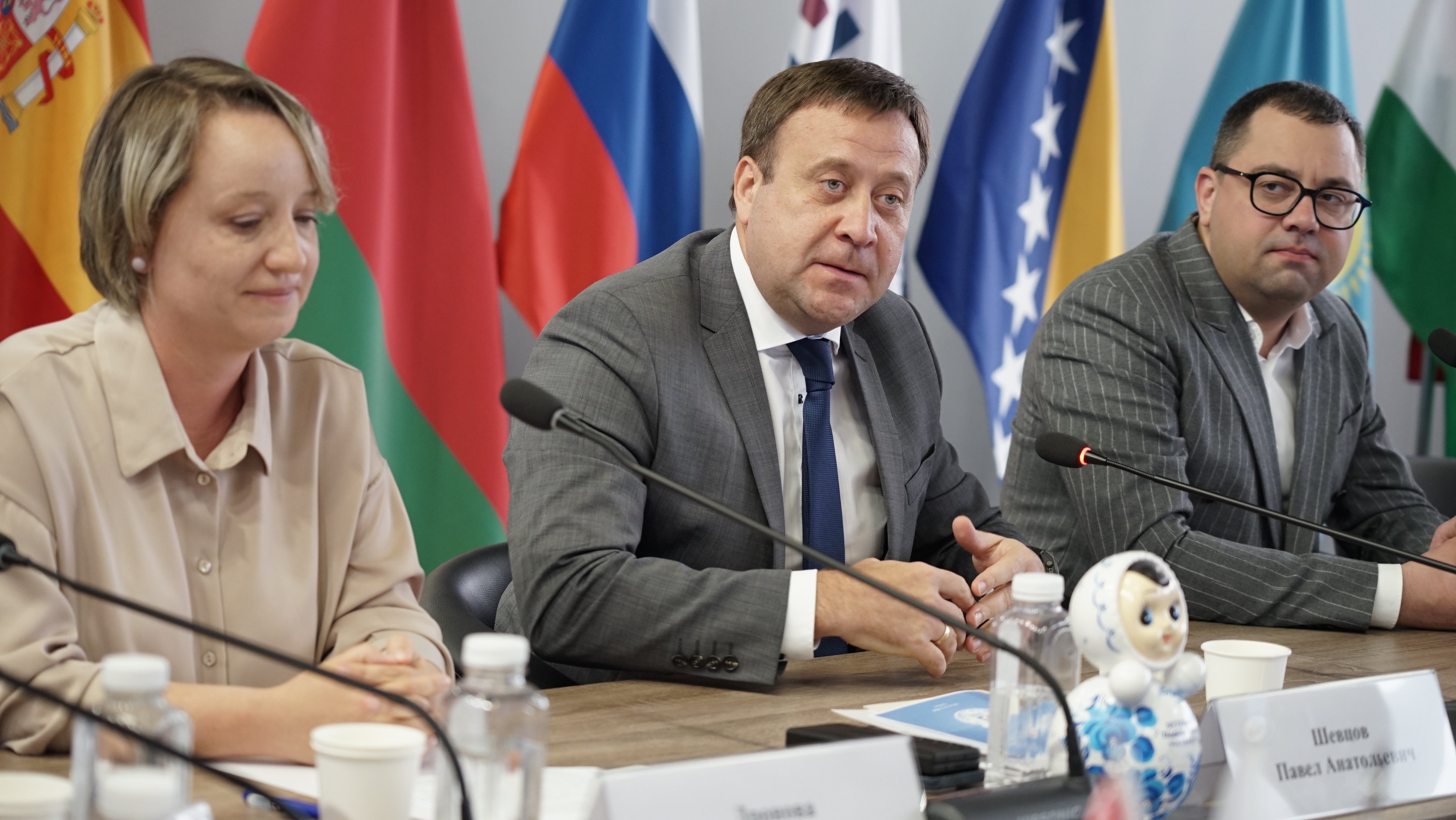
Derzhavin Tambov State University is one of the most ambitious regional higher education institutions in the country, aiming to become a leading Russian university in public diplomacy. To this end, the University actively recruits international students and develops cooperation with Latin American countries. Creative Diplomacy President Natalia Burlinova spoke with TSU Rector Pavel Moiseyev, one of Russia's youngest rectors, about how TSU competes with leading Russian universities on the international stage.
Nataliia Burlinova: Tambov University positions itself as one of the most internationally oriented regional higher education institutions in Russia. Your plans also include promoting the concept of a flagship university for public diplomacy. As an expert in this field, I can say that there is no such a university in Russia yet. Why has public diplomacy suddenly become one of the university's strategic priorities?
Pavel Moiseev: On the one hand, this is a fundamentally philosophical and patriotic question, and on the other, it's practical and quite financially sound. In fact, the goal wasn't to become a public diplomacy university, but to ensure our university's presence in Russia and around the world. We considered how we could survive, given the intense competition.
The official population of Tambov barely reaches 300,000, and the entire region is now less than a million. And unfortunately, this number isn't growing, it's declining. Therefore, we need to decide how the university can grow and survive. We started looking at what we're really good at. Over the past 30 years, we've probably earned 50 percent of our total revenue ourselves. This includes educational services, a large portion of which comes from international student training. We began to consider our competitive advantages. Unfortunately, our biggest competitive advantage so far is the dollar exchange rate. We understand that this won't last forever, and the economy is changing. Therefore, we currently have a limited window of opportunity. We need to establish the university as an international brand within this short period of time, building it into a world-class university. We then began developing international ties at various levels and observed how Asian universities, particularly the Chinese, are conducting their work. They are now approaching any cooperation through the prism of public diplomacy, through educational and cultural relationships. Thus, we realized that public diplomacy is the key to solving this problem, as it is precisely through it that we can promote regions, including our own.
Public diplomacy is the key to solving the problem, since it is through it that regions, including ours, can be promoted.
NB: Are there other universities in the region that, like you, are trying to promote themselves internationally?
PM: Most universities are currently working, some successfully, to attract international students. Speaking of our region, we have Tambov State Technical University (TSTU), which actively attracts students in technical programs. There's also Michurinsk State Agrarian University, which, as far as I know, also attracts international students in its agricultural programs.
We have a lot of competitors – the entire Central Federal District. The more you dig into this, the more you realize that many things are completely unobvious. For example, Harbin which is located in the northern Heilongjiang Province, was once, so to speak, China's breadbasket, thanks to its agriculture, developed heavy industry, and so on. Now it's a depressed region, from which young people are leaving for the south. From our talk with young people there, we learned that they were interested in studying in Russia, and not in the Far East but in Central Russia. Therefore, this market is open to us; we have competitive advantages here. I think that if you compare us to other universities in this country, you will see that they're generally similar in terms of the range of educational programs they offer. There are many universities we look up to. Take, for example, RUDN University, Kazan Federal University, and our neighbors, Mordovia State University and Mari State University. Our colleagues are working very hard, and the market is really large. We don’t have to take anything away from anyone; instead, we need to consolidate and move forward.
NB: What, in fact, does the concept of a public diplomacy university mean for you personally?
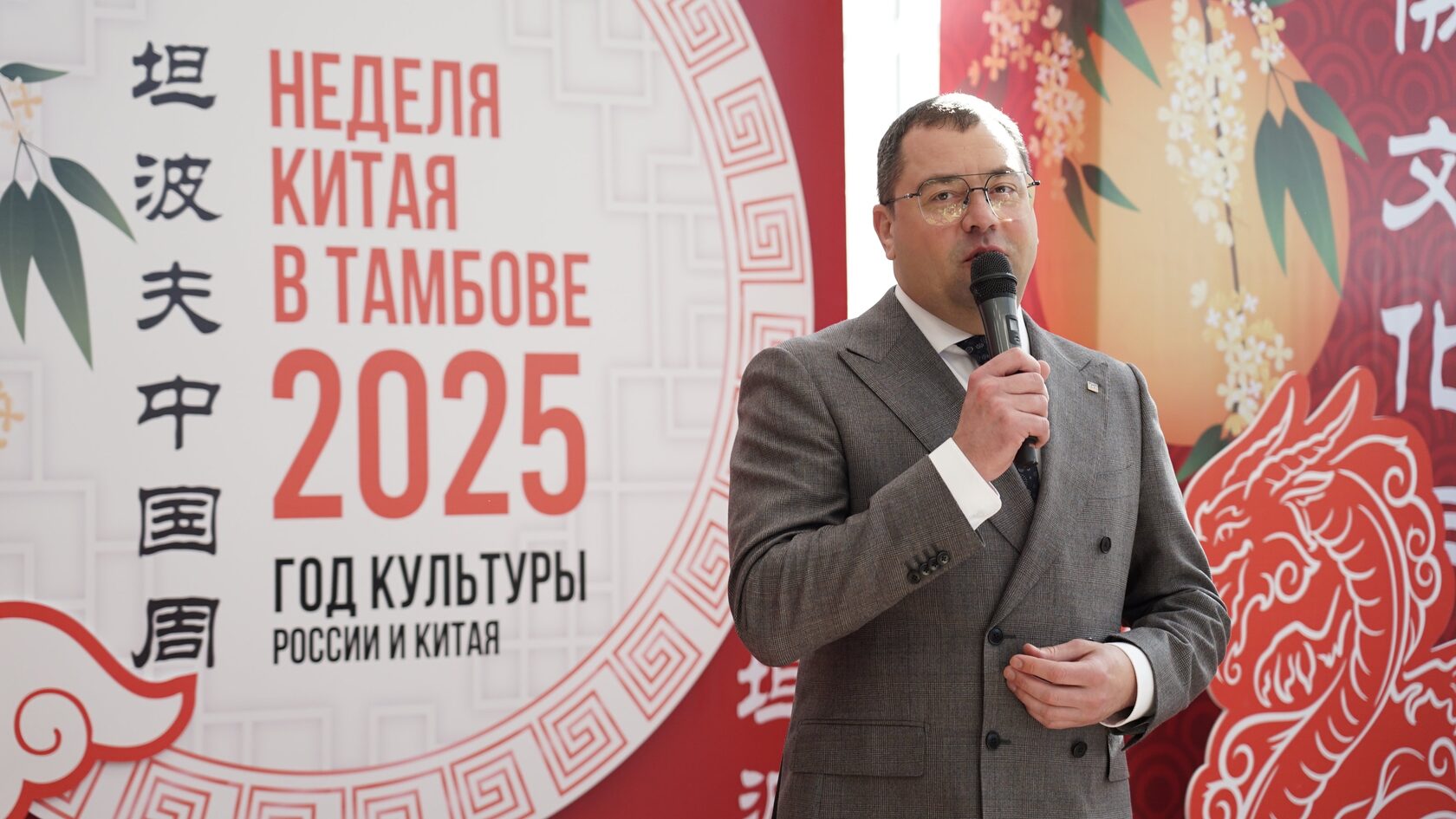
PM: Some time ago, it was everything that related to public diplomacy. It was a clear, structured activity. Here, again, I'll mention China. Why? Because they've preserved this model. An organization like the Chinese People's Association for Friendship with Foreign Countries still operates in China. After all, it's nothing other than the Soviet model. Of course, our "soft power" is somehow realized through Rossotrudnichestvo and other institutions, but in Russia, it's not structured. If we're talking about public diplomacy as an element of public administration, then we probably understand that a university is a development institution in this way. I'll give you another point related to China. I understand why, for example, Chairman Xi, when he visited Russia on May 9th in 2025, proposed to our president that 2026 be declared the Year of Education. The Chinese have been keeping an eye on us and are, in principle, interested in investing in Russia and working together on different things. But at the same time, they want to see universities as a kind of layer. That's the role of universities.
Furthermore, it was my good fortunate to travel to Rio de Janeiro and participate in a meeting of the interdepartmental working group organized by the ministries of education of the Russian Federation and Brazil. Following the working group, on February 5, an intergovernmental commission headed by Prime Minister Mikhail Mishustin visited Brazil. Here, too, the mission and role of universities are clearly evident. Although we were not discussing public diplomacy sitting around the table, but scientific projects and scientific cooperation, it is precisely in this framework that educational and scientific projects are actually public diplomacy projects.
NB: Pavel Sergeevich, I'm very pleased to see that the theory I described in the textbook closely matches your practical activities. It’s quite obvious that universities are actors in the educational aspect of the public diplomacy system. You have talked a lot about China. How is it that your university is now becoming one of the leaders among regional universities in developing relations with Latin America?
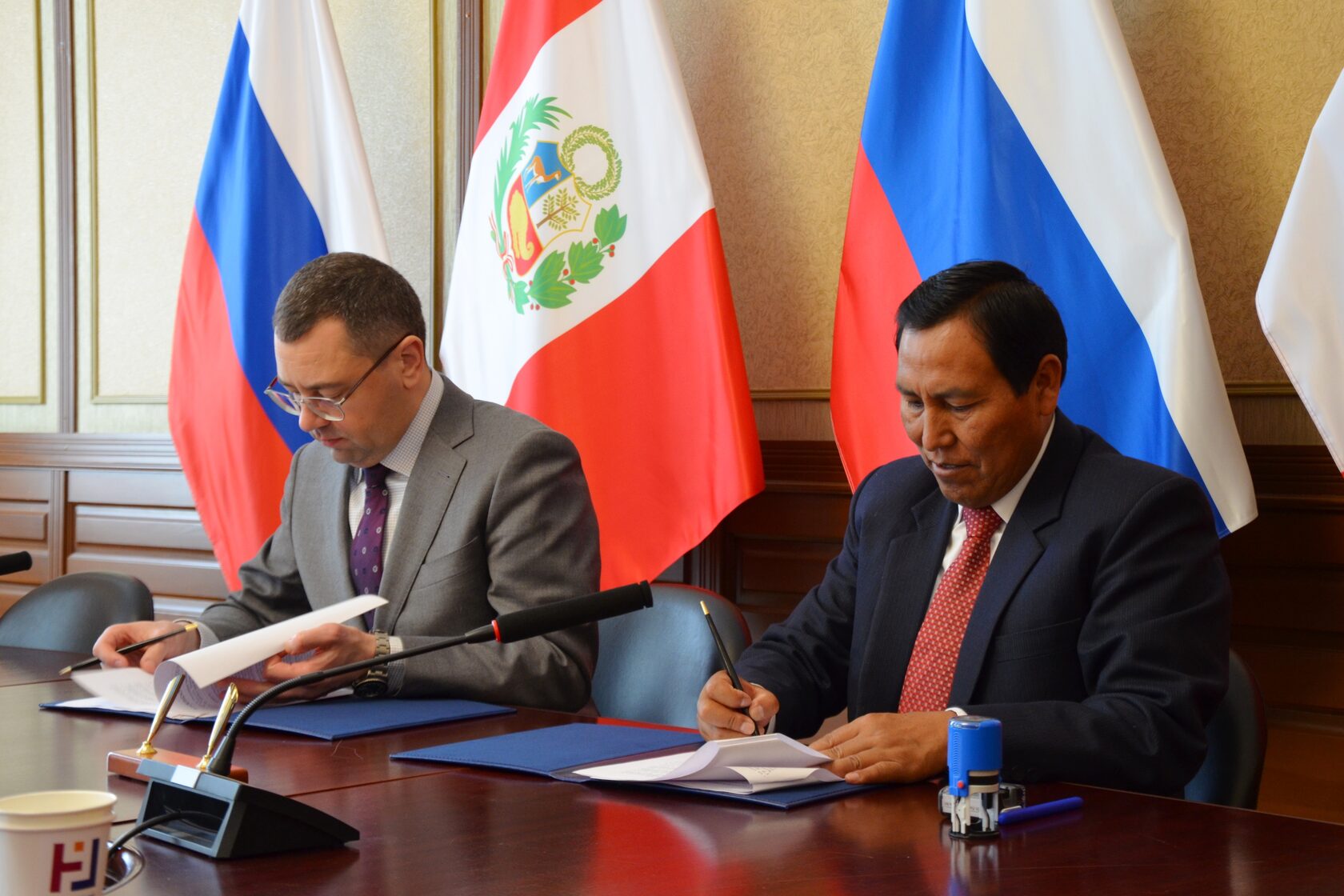
PM: Latin America opened up to us quite naturally. Some time ago it was a completely foreign and distant region for us; we were ideologically distant, and nothing really made sense. However, when we began our communication with Latin American institutions, we realized it was a treasure trove for Russian partnership. I can say, for example, that I feel very comfortable there. What I found particularly important and valuable was that our countries are generally very similar in their economic activities. That is, the predominant agriculture, the iron ore industry, and so on. Science, in any case, is focused on the real sector. And given that our industrial specifics are similar, I hope that our scientific projects will also develop. Recently we hosted a large delegation from the National University of the Altiplano of Puno, Peru. It's a wonderful university, very open people. I don't know, of course, how our cooperation with them will go, but somehow I want to believe it will be constructive. And I hope we will learn a lot from them.
NB: Tambov doesn't rank highly in the Public Diplomacy Ranking of Russian Regions. Is it fair to say that, in a certain sense, the university is the region's face internationally, and are there other active actors in the region promoting international cooperation?
PM: We now have rich experience in promoting inter-municipal cooperation. Many municipalities appeal to the university for assistance. For example, one of our municipalities recently established ties with Ghana, and the university, which has translation and expert resources, actively assisted in this process. The same is true, for example, of cooperation with Abkhazia. Many municipalities work in Abkhazia, but they still can’t do without the university. We've built a relationship with the Russian House there. The similar situation is with Belarus. It's a complex model, considering both the university and the region. While previously these were completely separate, unrelated entities, now it seems we're uniting in a positive way. Many municipalities lack any international practice or experience. We help them and complement each other's agendas; that is, they come to us for one topic (education), and for another, they turn to the municipality. We often initiate the idea of twinning, and sometimes we succeed.
NB: In the context of twinning, I'd like to ask how you're building your relationship with Rossotrudnichestvo. Is it effective, ineffective, weak, or strong?
PM: Overall, I believe we have built a businesslike, constructive relationship with Rossotrudnichestvo. One might even say productive relationship. Yevgeny Primakov, the agency's director, once visited us. I'd very much like to thank Pavel Shevtsov, deputy director, for his support in implementing many projects. It's worth noting that Rossotrudnichestvo is a complex organization. Our interaction with certain Russian Houses is excellent. Take the Russian House in Grodno, for example. I’m really grateful to its leadership and express my sincere admiration. We were able to hold there a joint exhibition dedicated to Victory Day. We also involved TSU’s international relations students in this event. It was a fantastic experience for them. We created a joint internship program for students from our university and students from Yanka Kupala State University of Grodno. This year, we offered the Belarusian State University a partnership with us. And we've built a very successful partnership – TSU, BSU, and Grodno State University. The rector of Grodno State University, Irina Kiturko, is a remarkable woman, very energetic. Other positive examples include the Russian Houses in Abkhazia and Lebanon.
NB: You’ve just mentioned the student internship program. How do you train students for the career in international relations?
PM: Our university is young, playful, and somewhat rebellious. How will study at an internationally oriented university differ from that at other universities? By its opportunities for self-fulfillment. We've been training specialists in international relations at the university for a long time. When I became rector and tried to sort through all the educational programs, a big question arose: where do these students acquire their "internationality"? It turned out that, at best, they acquire it at our university, fortunately, since we have many international students. Therefore, we set a goal of providing a meaningful education, including internships and practical training abroad. Many things come up against the language barrier. We have students who are truly making progress in this direction. And we have already successfully implemented a program of joint practical training and internships. The number of participants in international academic programs has tripled. About 20 agreements on academic mobility programs have been signed with different institutions from seven countries. This has been done over the past two years. And now these aren't just students majoring in international relations; they're interdisciplinary groups. The partner universities we're working with are willing to offer internships and placements in various fields of study. That's our special thing.
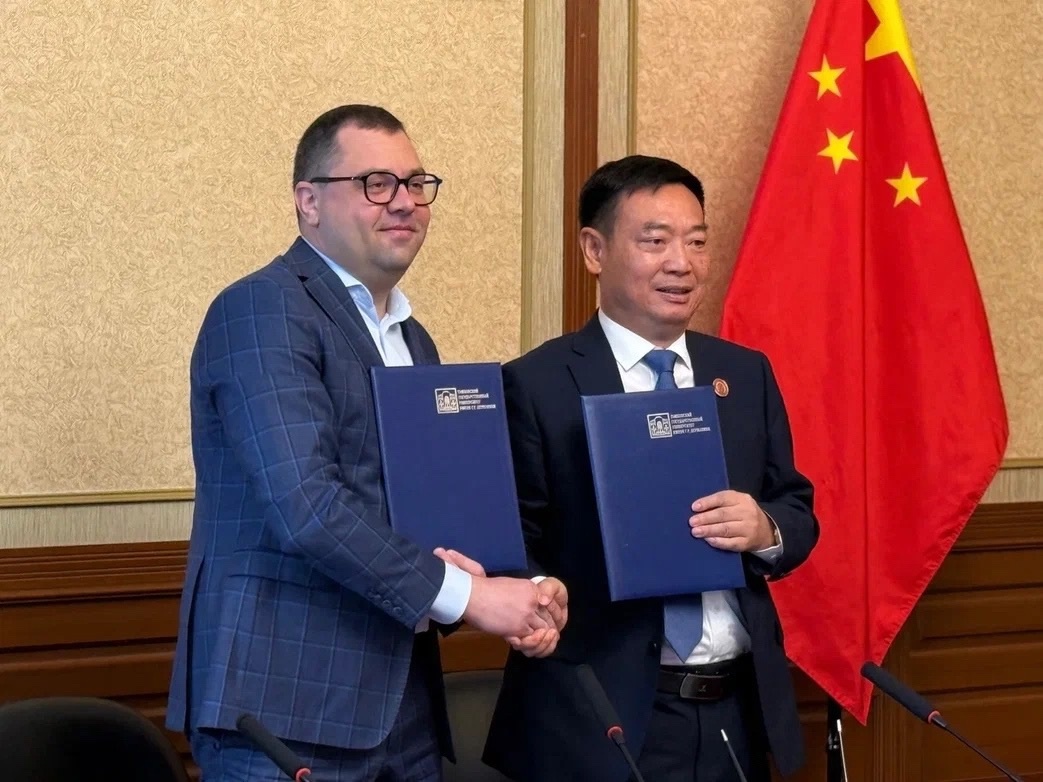
We regularly send a large number of students and staff members to China. This year, 30 TSU students and faculty have already been there. Essentially, everyone with varying levels of Chinese proficiency has already traveled to China at least once, some even twice. We have winners of the Hubei University program, which is a very large and serious program. This means there's a minimal barrier to participation in international academic mobility programs. We can arrange study at any of our partner universities for everyone a bonus, especially for those studying on a state-funded basis. In addition to internships and practicums, we conduct a large number of joint activities with students from other universities. Joint plein air sessions, for instance. We share our knowledge, skills and experience with students doing different courses in creative areas of study at our partner universities. For example, students from Samarkand State Pedagogical University have visited us, as have students from Belarus, and very soon we are expecting design students from Algeria. In our turn, we send TSU students to our partner universities, where they participate in plein air sessions and other off-site events.
One of the opportunities for student self-fulfillment is creative industries. We have a creative cluster at our university. It includes our own theater and vocal studios, a film center, and a recording studio. All students have the opportunity not only to pursue creative work but also to gain additional qualifications in this field.
Our international students are incredibly creative. Many of them bring folk costumes and musical instruments from home. We have many students who didn't enroll in creative programs but would like to pursue them. For example, for seven years now, we've been running a network acting training program with GITIS (Russian Academy of Theatre Arts), holding autumn schools. An entire GITIS class comes for 10 days. The students collaborate on creative projects, and we see the results of their work on the theater stage. This year, we produced "Dead Souls," which has already been performed three times in Tambov, selling out the entire theater twice. This format has effectively become a public diplomacy event, as students from the Belarusian State University of Culture and Arts participated in it in 2025. In general, the development of creative industries is also one of our specialties.
NB: How do you see your university in 10-15 years in the context of international cooperation and public diplomacy?
PM: A soldier who doesn't want to become a general is a poor soldier. If we start something, then, of course, we aspire to leadership. And we want to create such an educational center in Russia, in the city of Tambov, in the Tambov Region, which is among the top three most Russian regions in Russia, with a 97% of Russian population. Why am I emphasizing this now? It's very important and interesting for foreigners. Getting back to the Chinese, Africans, and Peruvians I would like to note that everyone is interested in studying in our region. Especially thanks to the fact that we have everything they need.
The Tambov Region has topped the rankings of the most ecologically clean regions in Russia for the past 20 years or so. Recently, the Altai Republic became a leader, and we are in second place, one of the best. Furthermore, our international students have always noted that it's safe here. Indeed, the local population is quite tolerant. We are a classic Russian region in terms of climate as well. We enjoy four seasons.
So, returning to your question about dreams and plans, I'd like to say that personally I am completely unimportant to the university, but I would still like the university to be associated with Russian students in 10 years as a place where you study and find yourself in an international environment. And I'd like foreigners to understand that Tambov has a university that is very tolerant and provides a good, high-quality education. I'd like them to know that if you want to study in Russia, you should definitely consider Tambov!
Source - http://picreadianalitika.ru/moiseev_interview