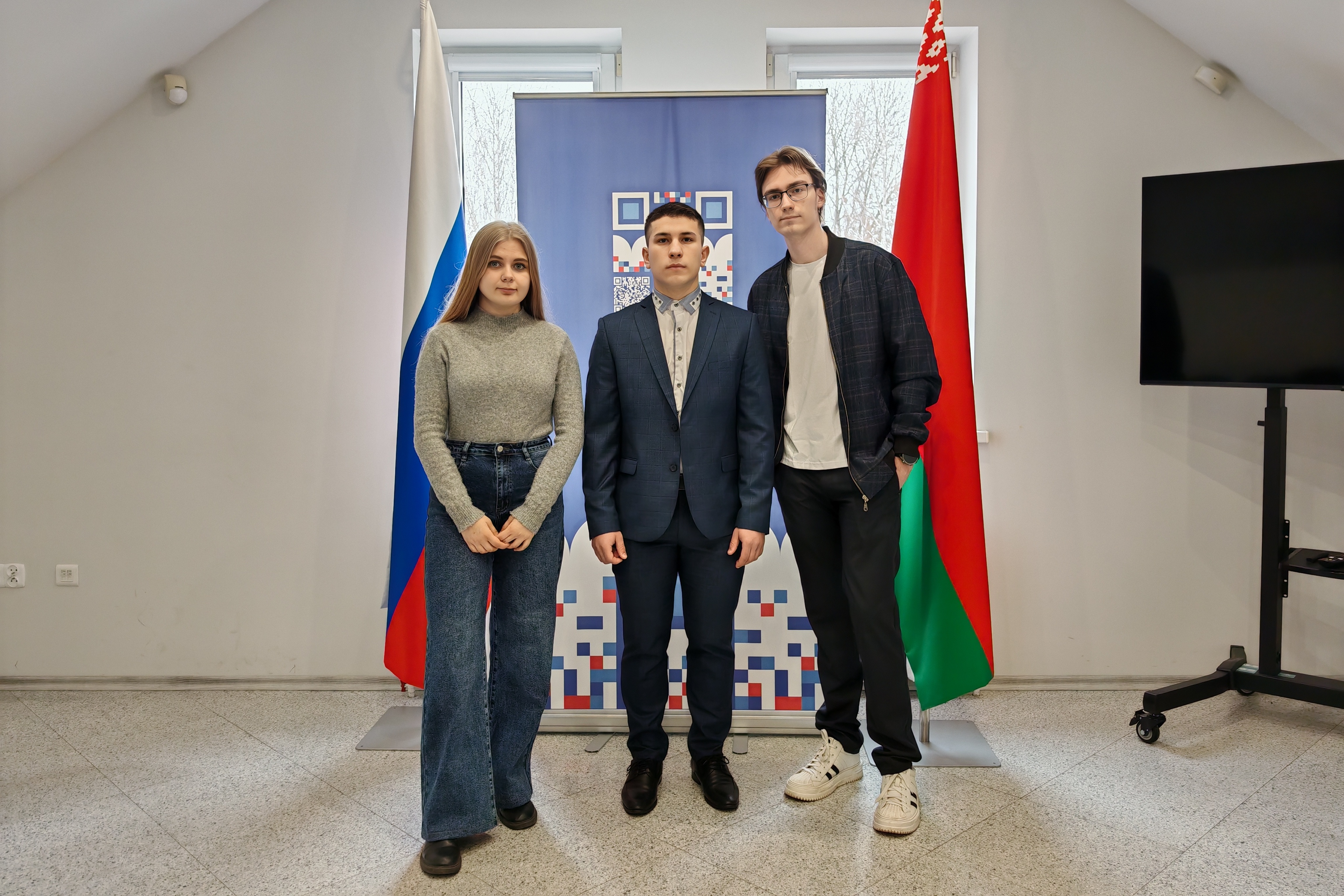
International Relations students from Derzhavin University – Ksenia Malmalaeva, Ivan Tikhonov, and Nikolai Belyaev – have arrived in Grodno, Republic of Belarus. They will complete their internship, which the Russian Center for Science and Culture (Russian House) has been organizing for the second year in a row for students of Tambov State University named after G.R. Derzhavin.
For two weeks, from April 1 to 18, Derzhavin University students, along with international relations students from Yanka Kupala State University of Grodno, will participate in an educational program. It includes cultural and educational events dedicated to the 81st anniversary of the Great Victory, the Day of Unity of the Peoples of Belarus and Russia, and the anniversary of Yuri Gagarin's flight into space.
During their internship, the students will visit schools and orphanages in Grodno, participate in a travelling photo library dedicated to the Great Patriotic War, participate in roundtable discussions, and participate in community service events. Particular attention will be paid to educational events aimed at strengthening the position of the Russian language, culture, and history in the world. Furthermore, the Law Faculty of the Yanka Kupala State University of Grodno once again provided students with the opportunity to attend lectures on international law.
The Russian and Belarusian participants in the project will not only gain valuable additional skills and knowledge in international relations but also unique experience in developing interuniversity student communication and effective teamwork.
The Russian House actively promotes the strengthening of interstate bilateral ties among youth and the younger generation of the Union State of Russia and Belarus.
Cooperation between the Derzhavin Tambov State University and the Rossotrudnichestvo representative office in Grodno was formally confirmed by a Memorandum signed on April 1, 2025. The partnership between youth from the Republic of Belarus, the Russian Federation, and Russian scientific and cultural centers, particularly the Russian Center of Science and Culture in Grodno, aims to create a unified sociocultural and educational space, expand opportunities for promoting Russian cultural heritage in the Commonwealth of Independent States, and develop international ties in the educational and cultural fields. This cooperation strengthens relations between the peoples of Russia and Belarus, opening new horizons for mutual understanding and fruitful exchange of experiences.