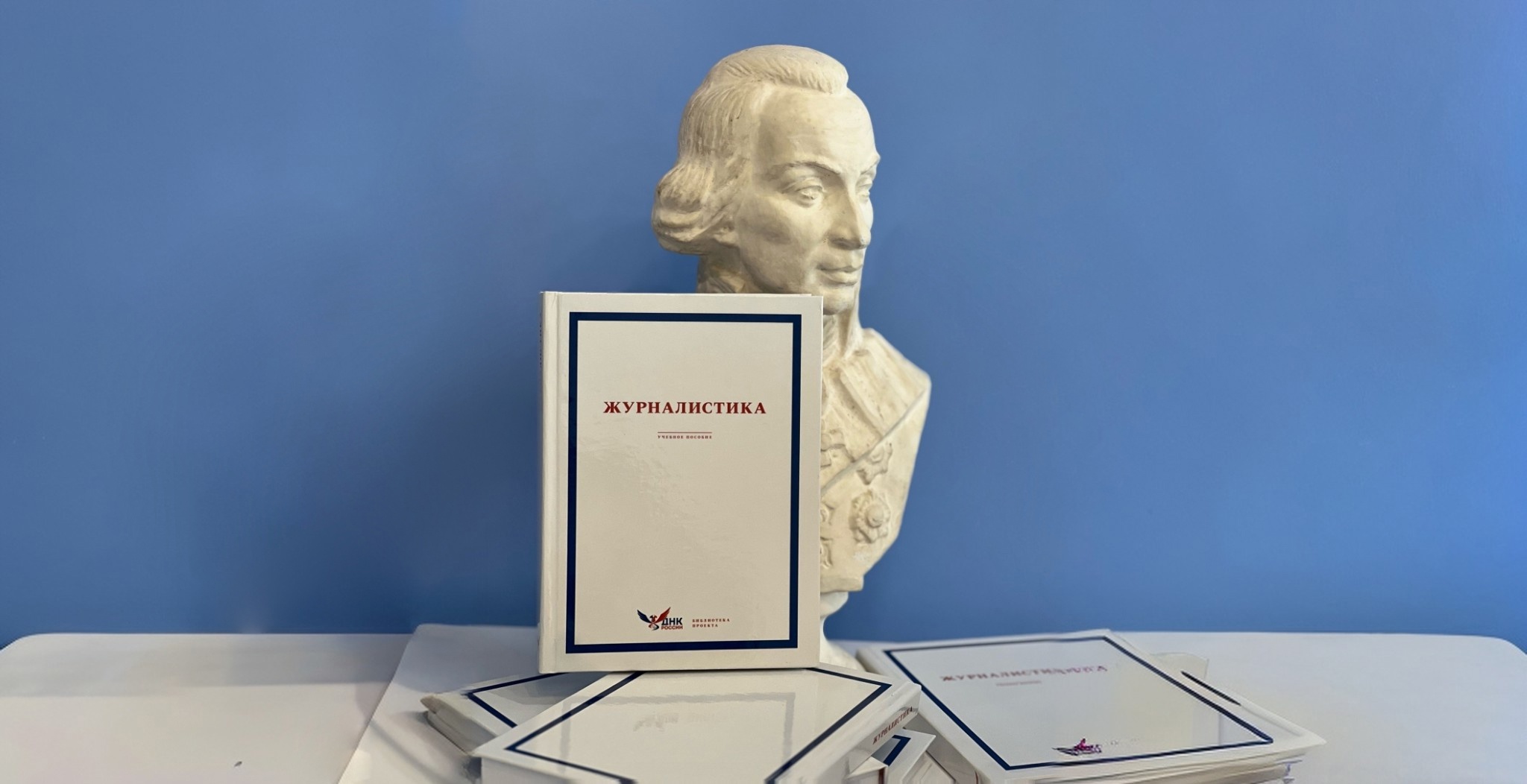
Derzhavin Tambov State University has published the textbook "Journalism" for non-core areas of training. It was published under the state assignment of the Ministry of Education and Science of Russia "Creation of Textbooks within the Framework of the Course "Fundamentals of Russian Statehood".
The textbook "Journalism" was developed at Derzhavin University under the project "DNA of Russia" at the Support and Methodological Center by order of the Ministry of Education and Science of Russia (Project manager – Associate Professor Svetlana Serova, PhD, Head of the Department of Journalism, Advertising and Public Relations of TSU named after G.R. Derzhavin). The Support and Methodological Center is supposed to unite the academic community to create a unified approach to teaching the humanities disciplines of higher education in accordance with the state ideology.
– It is an honor for Derzhavin University to become one of the platforms for implementing the “DNA of Russia” project in terms of updating the humanitarian disciplines of higher education in accordance with the state policy on preserving and strengthening traditional Russian spiritual and moral values, – noted Pavel Moiseev, the TSU rector.
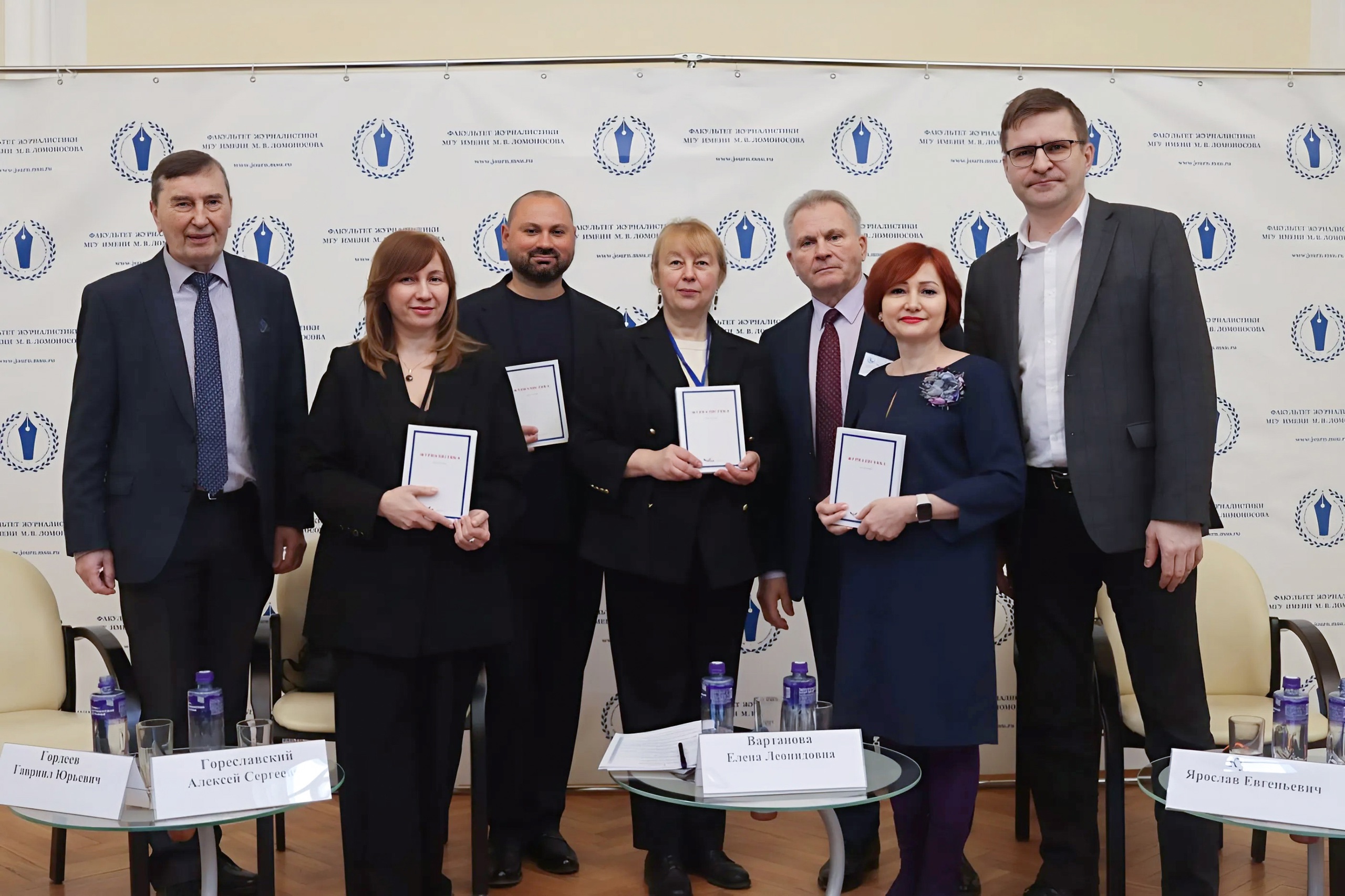
“Journalism” textbook was presented at the Faculty of Journalism of Moscow State University named after M.V. Lomonosov at the plenary session of the international scientific and practical conference “Journalism in 2024: Creativity, Profession, Industry”.
The team of authors for the textbook was headed by Elena Vartanova, Doctor of Philosophy, Professor, Head of the Department of Theory and Economics of the Media, Dean of the Faculty of Journalism of Moscow State University, Academician of the Russian Academy of Education, Chairperson of the Educational and Methodological Board “Journalism”.
The authors of the textbook include the most prominent representatives of Russian journalism science: Sergey Smirnov – Doctor of Philology, Associate Professor of the Department of Theory and Economics of the Media, Deputy Dean for Educational and Methodological Association of the Faculty of Journalism at Lomonosov Moscow State University; Anatoly Puyu – Doctor of Sociological Sciences, Professor, Director of the Institute "Higher School of Journalism and Mass Communications" at St. Petersburg State University; Sergey Korkonosenko, Doctor of Political Sciences, Professor, Head of the Department of Theory of Journalism and Mass Communications at the Higher School of Journalism and Mass Communications at St. Petersburg State University; Svetlana Serova – Candidate of Philology, Associate Professor, Head of the Department of Journalism, Advertising and Public Relations at Derzhavin Tambov State University; Ekaterina Zvereva – Doctor of Philology, Professor of the Department of Journalism, Advertising and Public Relations at Derzhavin Tambov State University; Vladimir Tulupov – Doctor of Philology, Professor, Head of the Department of Public Relations, Advertising and Design, Dean of the Faculty of Journalism at Voronezh State University; Andrey Prokhorov – Doctor of Philology, Professor of the Department of Journalism, Advertising and Public Relations at G.R. Derzhavin Tambov State University; Alla Shesterina – Doctor of Philology, Professor, Deputy Dean for Research at the Higher School (Faculty) of Television at Lomonosov Moscow State University; Vladimir Oleshko – Doctor of Philology, Professor, Head of the Department of Periodical Press and Online Publications at Ural Federal University named after the first President of Russia B.N. Yeltsin.
The textbook "Journalism" has passed the examination of the Federal Educational and Methodological Association in the system of higher education in the enlarged group of specialties and areas of training "Mass Media and Information and Library Science" and received the stamp of recommendation of this publication as a textbook for students of educational institutions of higher education studying in non-core areas of training (bachelor's degree).
- The main objective of the discipline "Journalism" for non-specialists is to develop in students the skills of conscious media consumption, critical thinking skills in the information and communication space, participation in the media environment and media culture, - says the head of the support and methodological center "Journalism", head of the department of journalism, advertising and public relations of Derzhavin University, PhD, associate professor Svetlana Serova.
Currently, the developed course is being tested in Russian universities in 22 areas of training. The experiment involved Kalmyk State University named after B.B. Gorodovnikov, Michurinsk State Agrarian University, Voronezh State University, Nizhny Novgorod State University named after N.I. Lobachevsky, Saratov National Research State University named after N.G. Chernyshevsky, Tambov State University named after G.R. Derzhavin, and South Ural State University.