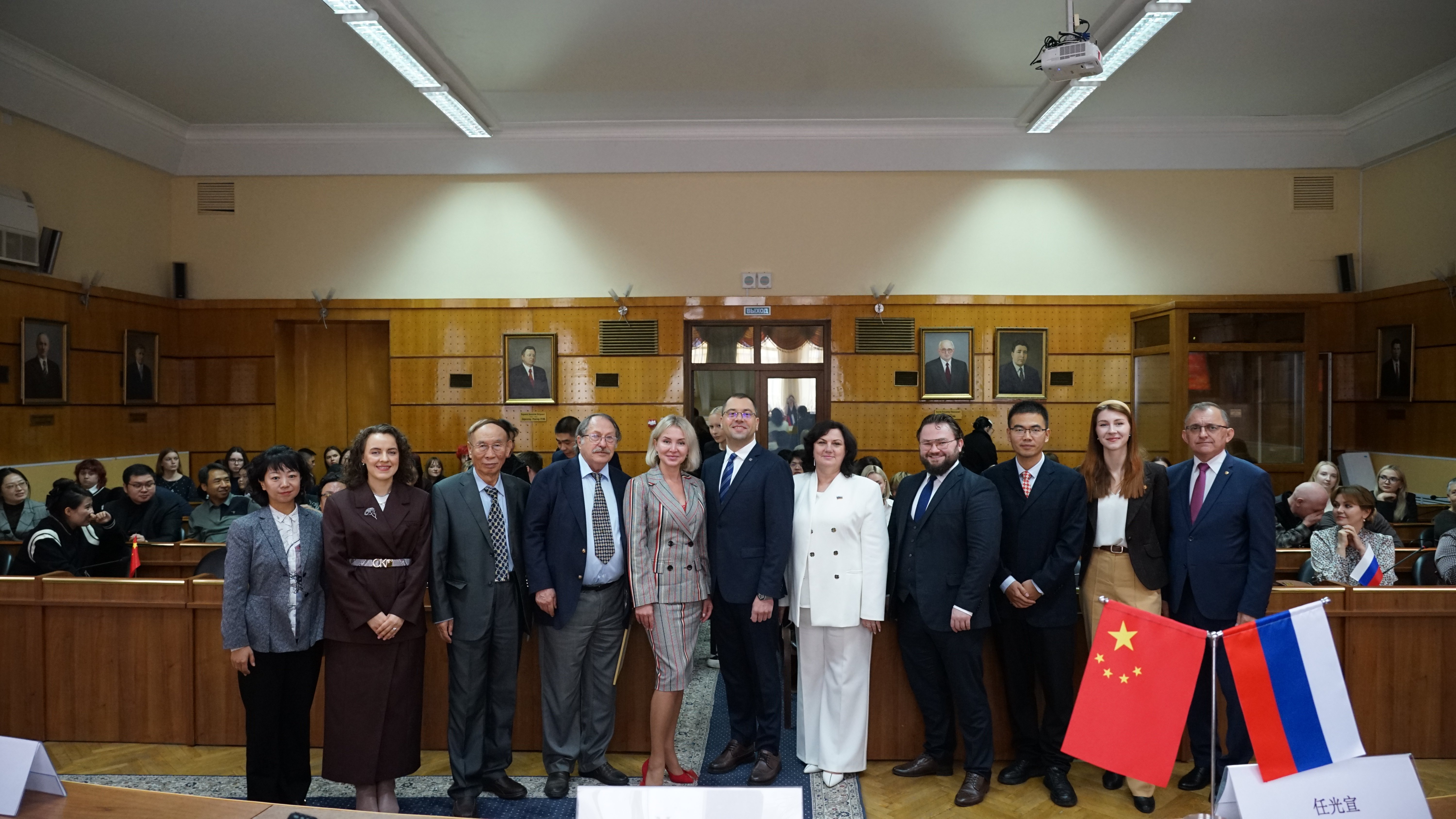
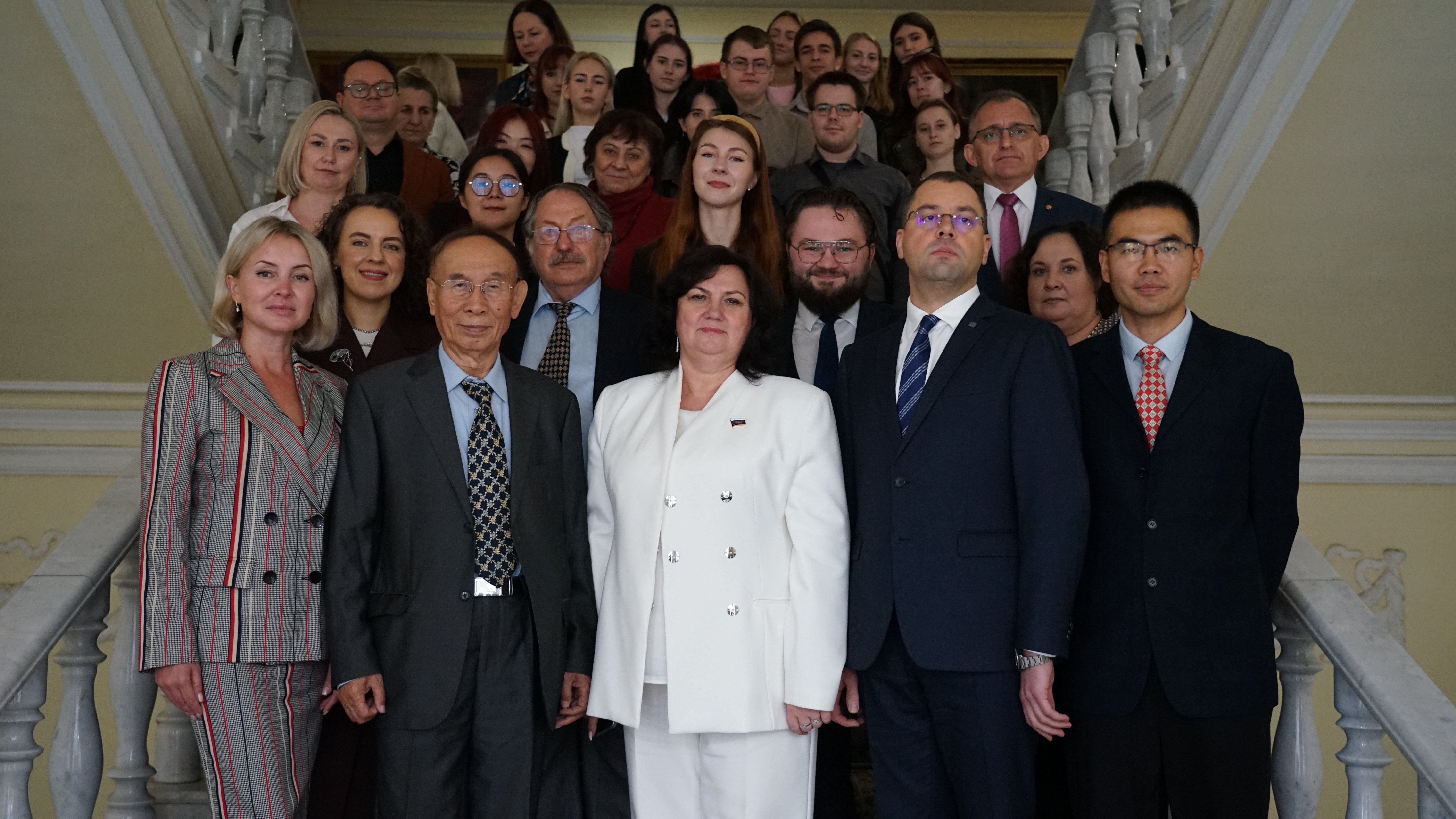
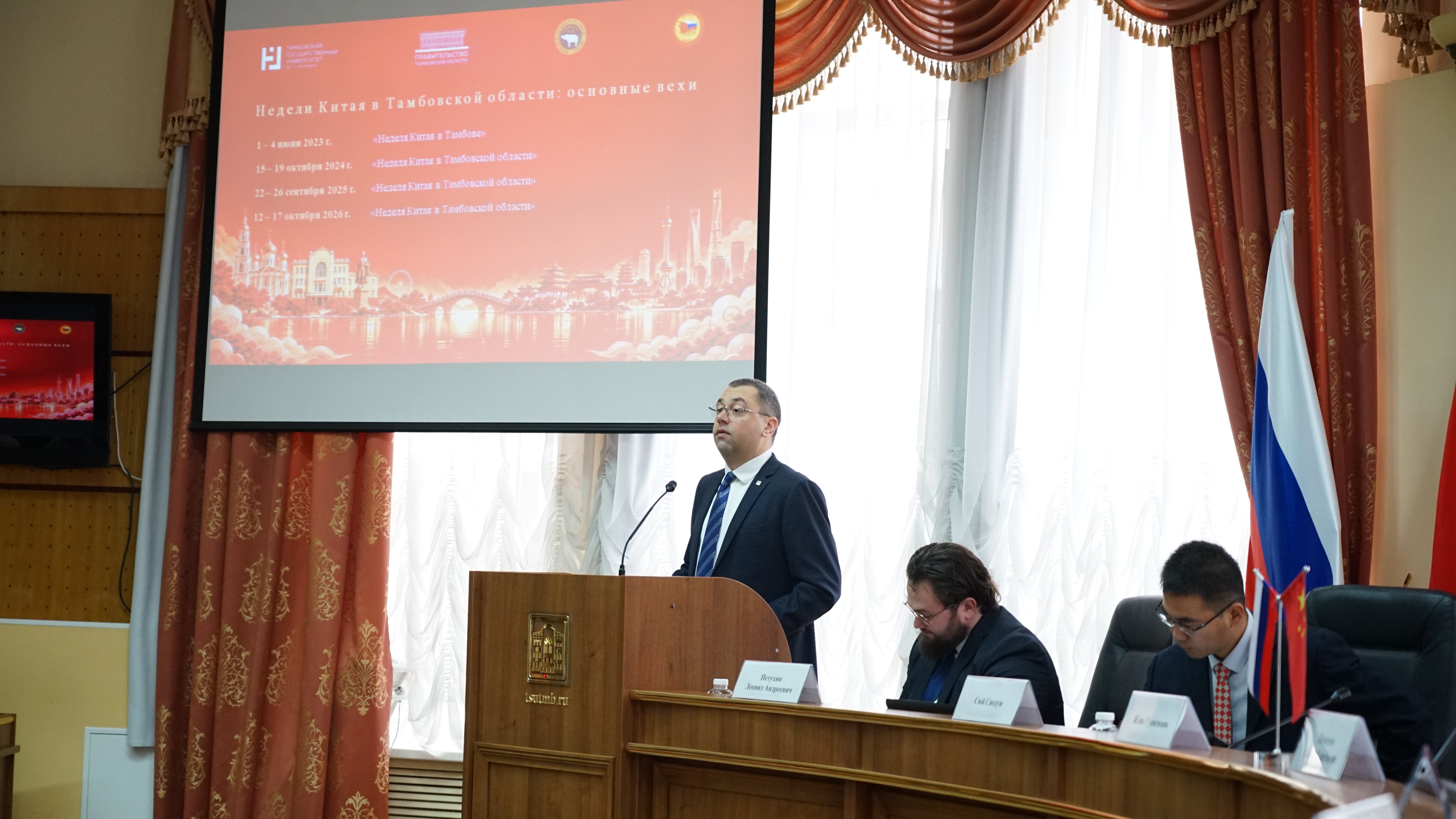
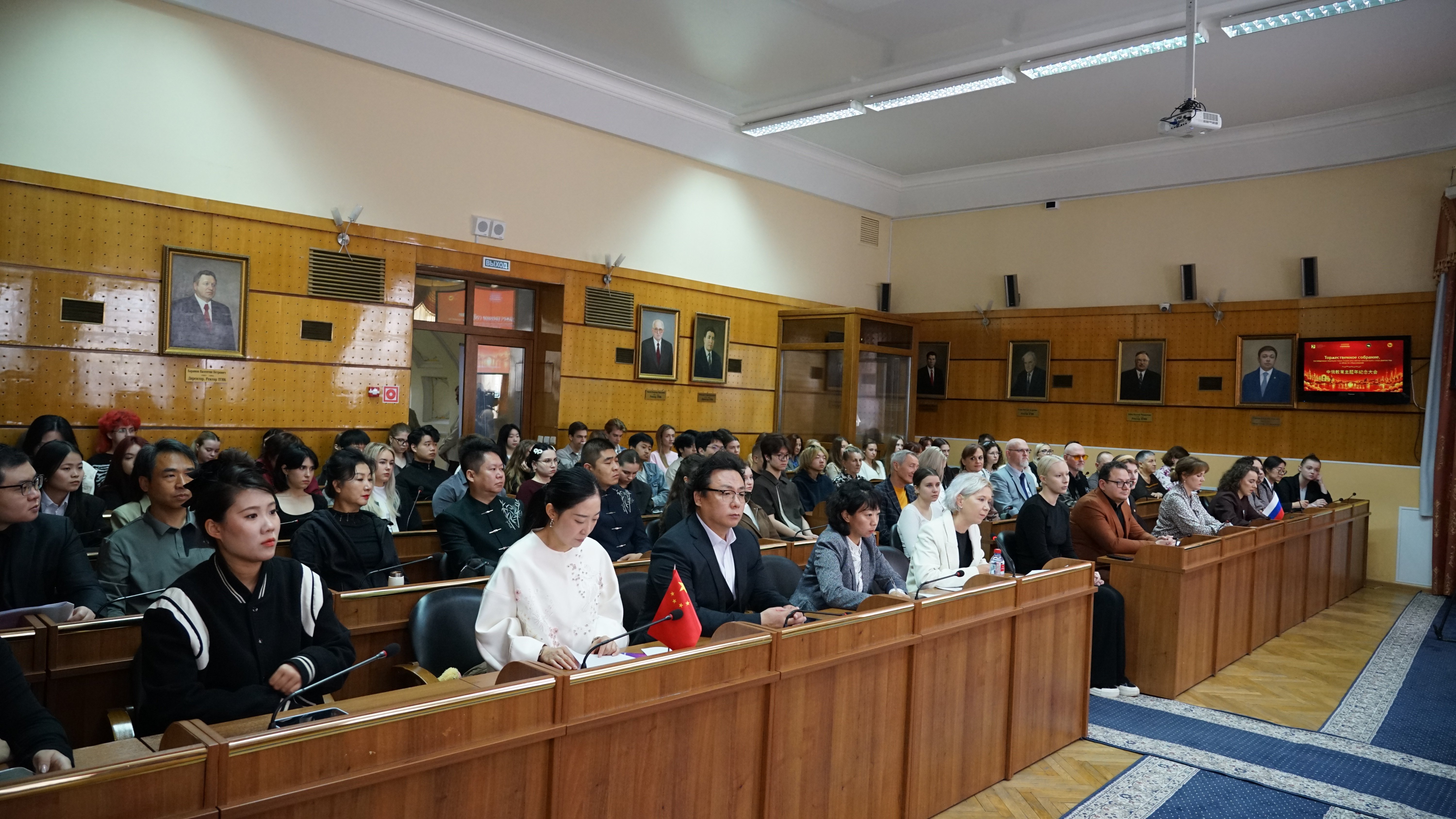
"China Week in the Tambov Region" continued with a ceremonial meeting dedicated to the Cross-Years of Russian-Chinese cooperation in education, attended by leadership from the Russian-Chinese Friendship Society.
"China Week in the Tambov Region" is the largest international humanitarian project in the region, aimed at developing and expanding multilateral cooperation with organizations from the People's Republic of China across various sectors—ranging from economics and education to sports, tourism, and cultural initiatives. The project is organized by Derzhavin University with the support of the Tambov Region Government, the Russian-Chinese Friendship Society (RCFS) and its regional branch, and the "White Elephant" Tambov Center for Cooperation with Asian Countries.
The week’s program, which brings together leading Sinologists, scholars, and university representatives from both nations, features over 20 academic and cultural events.
Participants of "China Week in the Tambov Region" were welcomed by Pavel Moiseev, Rector of the G.R. Derzhavin Tambov State University; Galina Shemanaeva, First Deputy Chair of the Tambov Regional Duma; and Olga Kamneva, Deputy Minister of Economic and Investment Policy of the Tambov Region and Head of the Department for Investment Activity and Foreign Economic Relations.
According to Derzhavin University Rector Pavel Moiseev, 57 Chinese citizens are currently studying at the university—a significant increase from the 14 students from the PRC enrolled just two years ago. Concurrently, the number of students from Derzhavin University traveling to Chinese higher education institutions for internships has grown more than fivefold. Derzhavin University is continuously expanding its range of educational programs that are in high demand among Chinese youth. There is a growing interest among Chinese citizens in professional development related to the Russian language; for instance, this year, instructors of Russian as a Foreign Language (RFL) from China completed an advanced training course titled "Modern Pedagogical Technologies in Teaching Russian as a Foreign Language."
In line with its mission as a "university of public diplomacy," Derzhavin University has spearheaded business visits for representatives from the regional business community to the Chinese provinces of Liaoning and Jiangsu. With the university’s support, agricultural representatives from the Tambov Region also participated in the Russia-China Agricultural Cooperation Forum, held at the Embassy of the People's Republic of China in Moscow.
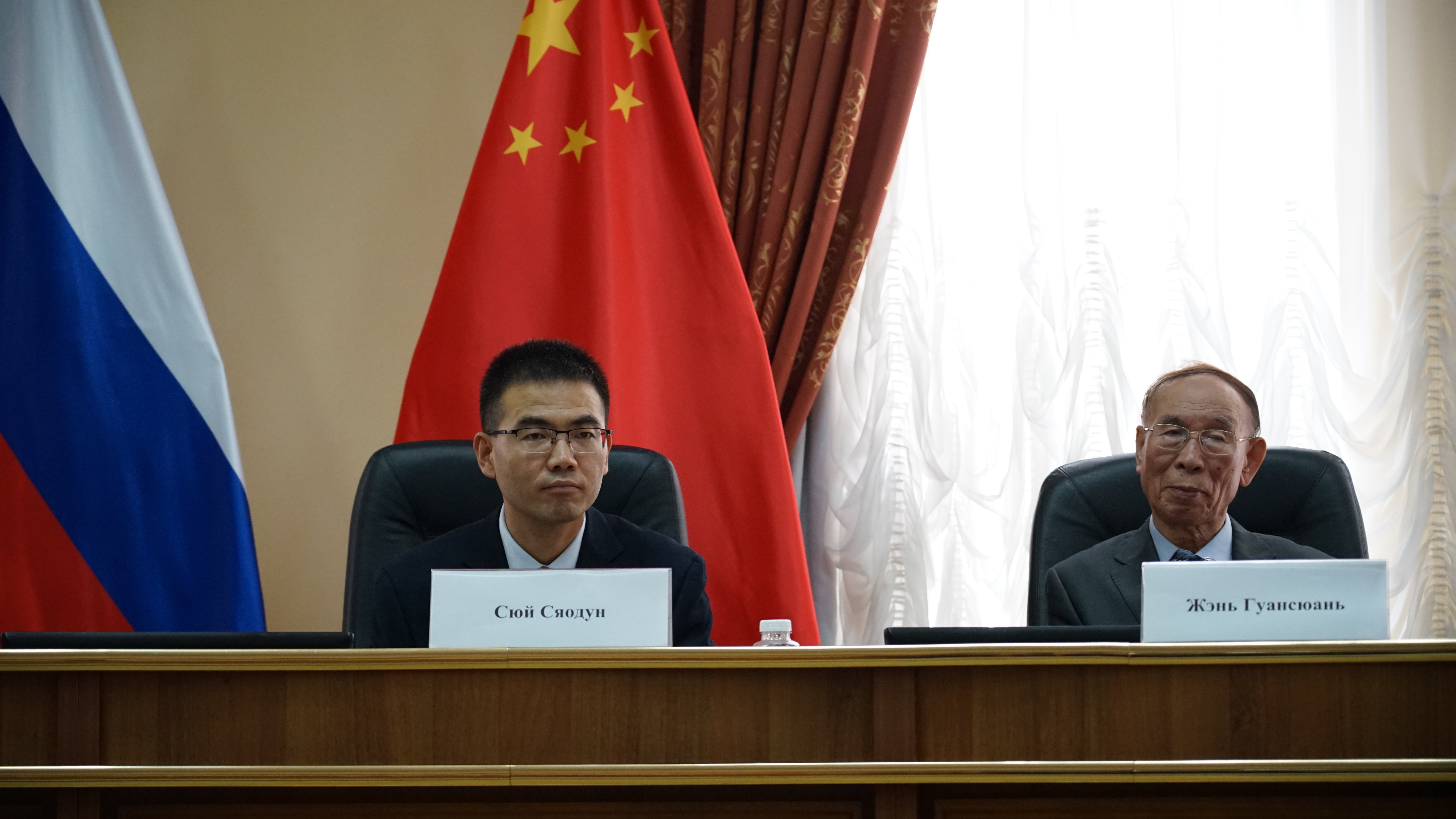
"Our primary plans and aspirations for our partnership with the G.R. Derzhavin Tambov State University center on developing academic mobility and fostering an exchange of expertise among our faculty. We also intend to facilitate student exchanges and organize joint musical performances, competitions, and festivals," noted Xu Xiaodong, head of the delegation from Shanxi University (PRC). "Collaboration with Russian universities is of great importance to the Chinese side. Russian culture and art are renowned worldwide, and we hope to gain an even deeper understanding of our Russian partners' experience. Our goal is to comprehend Russian culture and to engage in a 'dialogue of civilizations' that allows for a mutual understanding of our respective cultures."
Over the past two years, with the direct assistance of Derzhavin University, three business delegations from China have been hosted in the Tambov Region.
Russian-Chinese scientific cooperation is also expanding, with ongoing discussions regarding potential collaboration in the agricultural sector with Chinese companies. A joint international research laboratory for embodied perception technologies and robotics has been established at Changchun University. Negotiations are also underway with Harbin Normal University to conduct research in the fields of algal biotechnology and carbon-neutral agriculture.
Derzhavin University is a member of several prominent international associations, including the Silk Road Universities Network and the Alliance of Chinese and Russian Universities for Language Education.
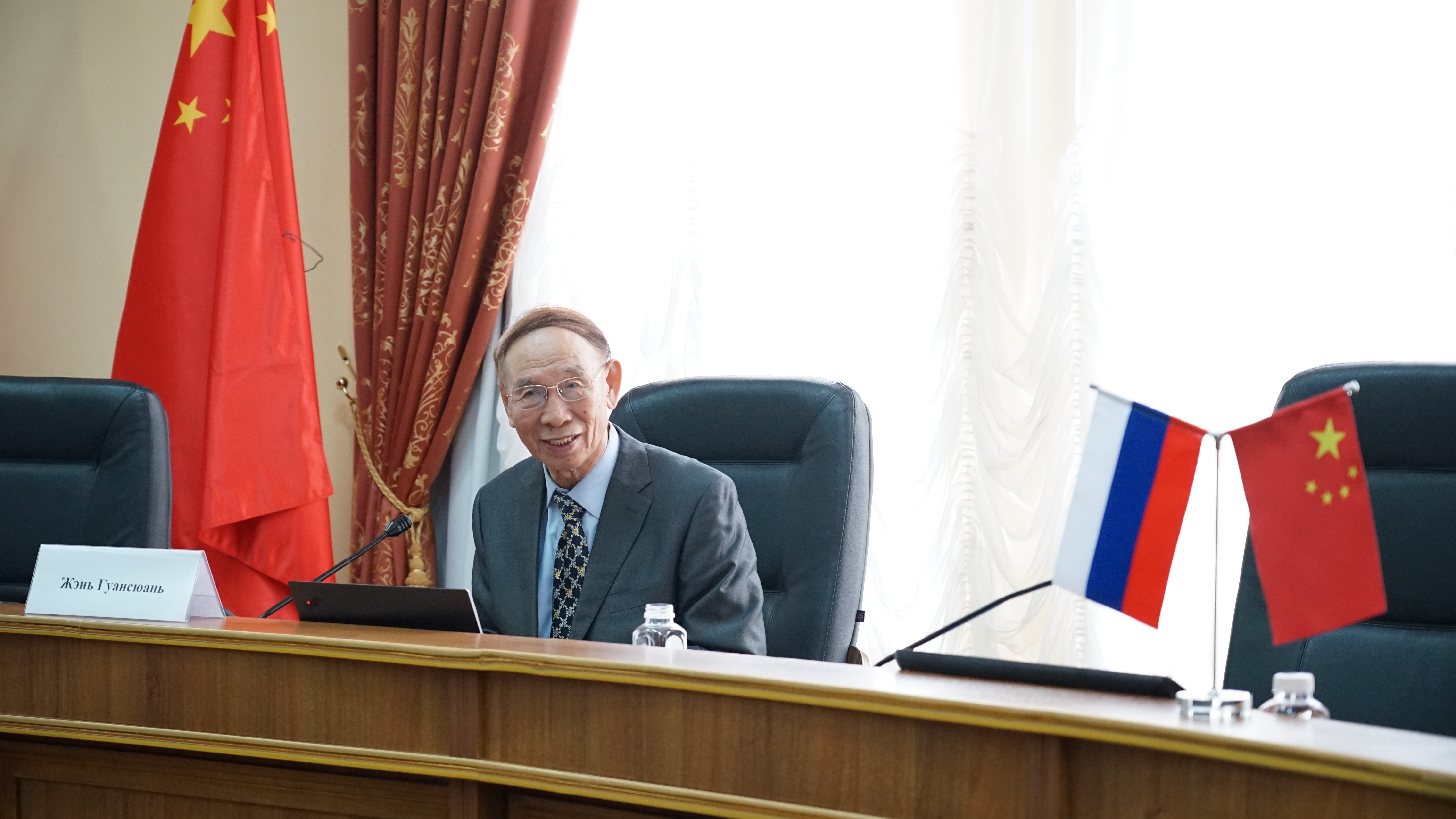
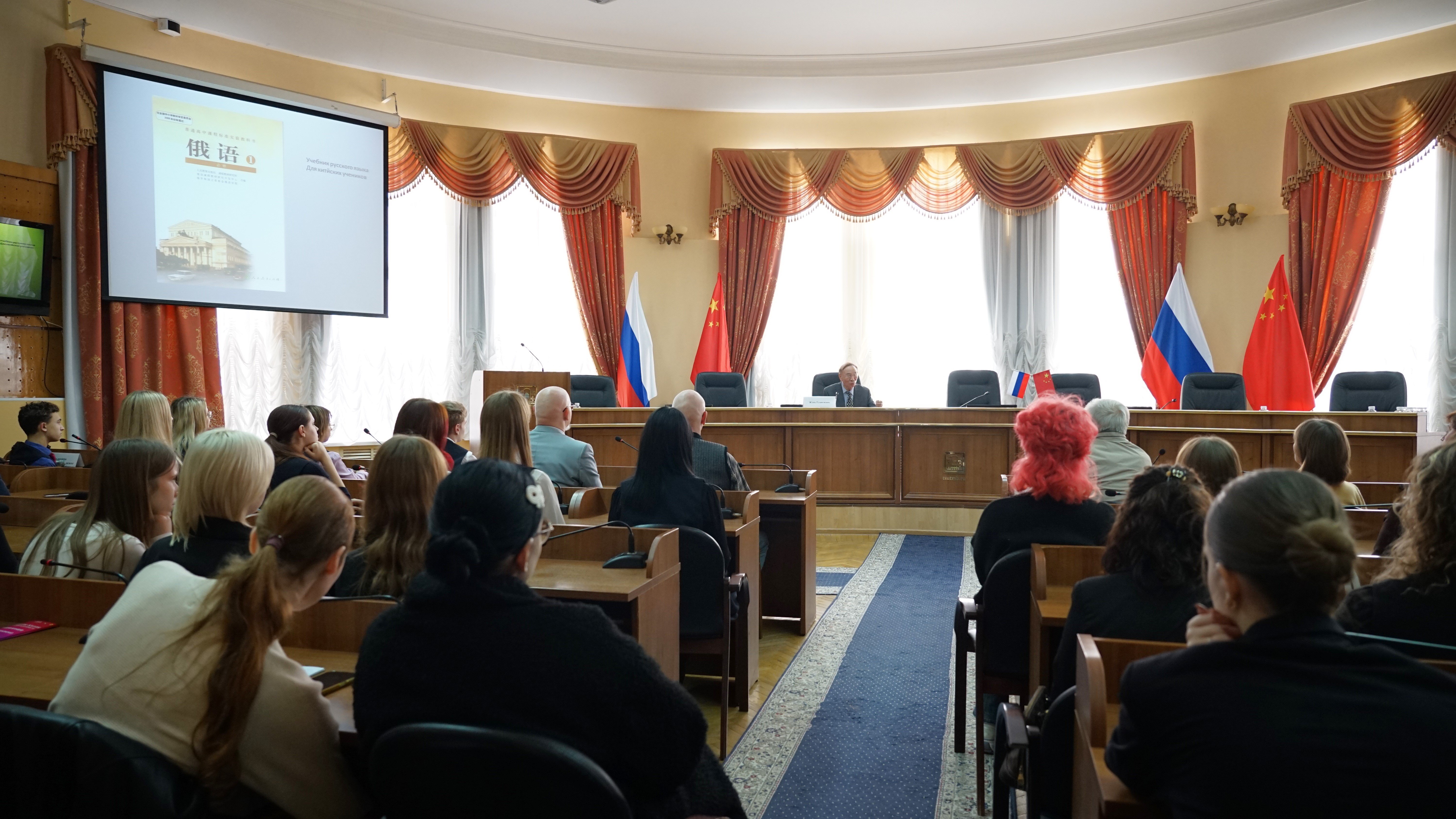
Additionally, a textbook titled "History of Russian Literature"—developed specifically for Chinese students—was presented to students at Derzhavin University. Its author and editor-in-chief is Ren Guangxuan, a scholar of Russian studies, Doctor of Philology, professor at Peking University, and deputy director of the Center for European Literature Studies. He has authored over 30 books and 120 scholarly articles.
Speaking to the students and faculty at Derzhavin University, the renowned scholar discussed the origins of his professional interest in the Russian language and literature. He reflected on the events of the "Cultural Revolution" in China (1966–1976) and its aftermath, which caused significant damage to the development of Chinese national culture and education. The "freezing" of Russian language instruction in Chinese educational institutions led to the complete disappearance of textbooks on Russian literature. In response, a team of authors led by Ren Guangxuan achieved a major academic breakthrough by publishing "History of Russian Literature," a work that immediately became highly sought after.