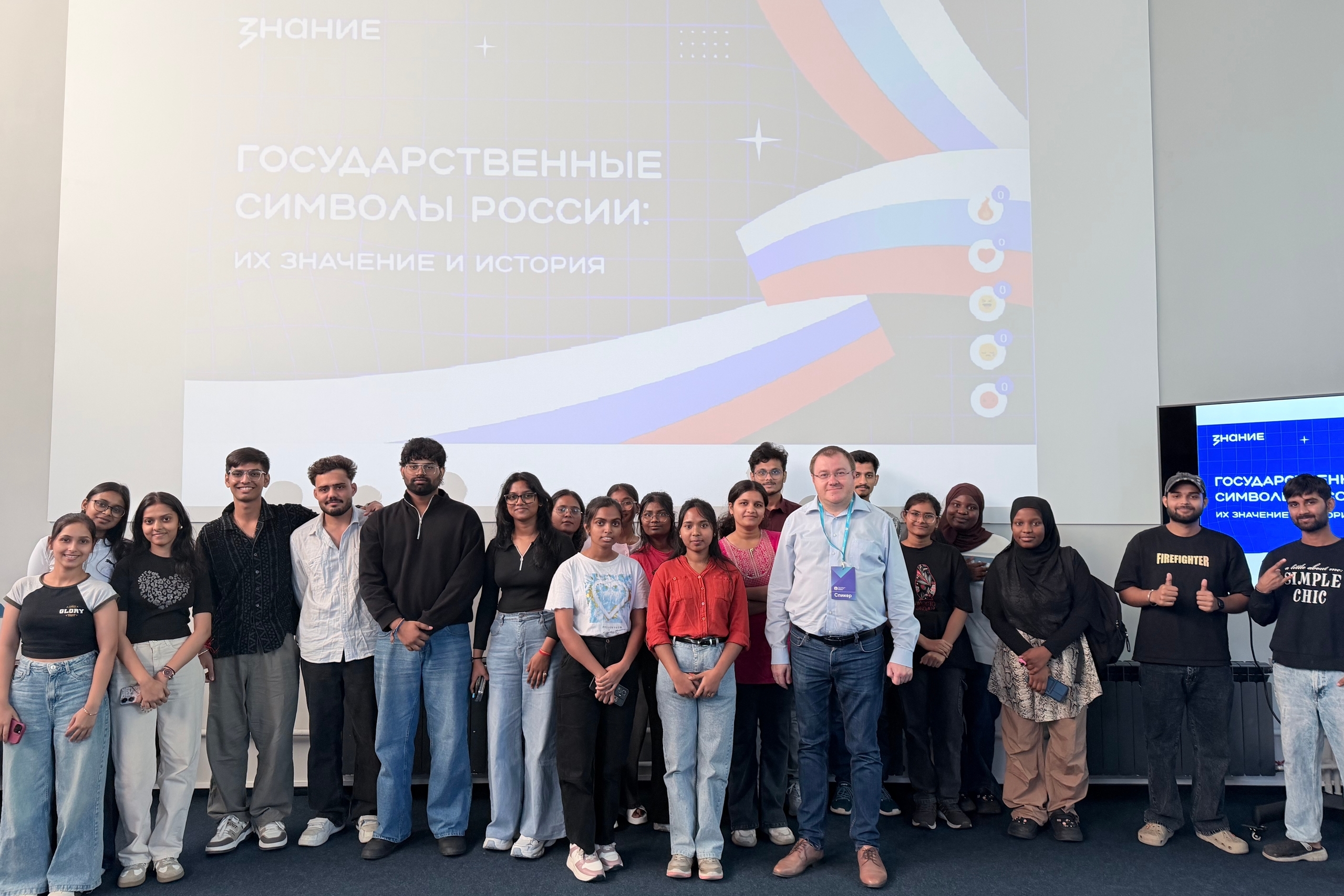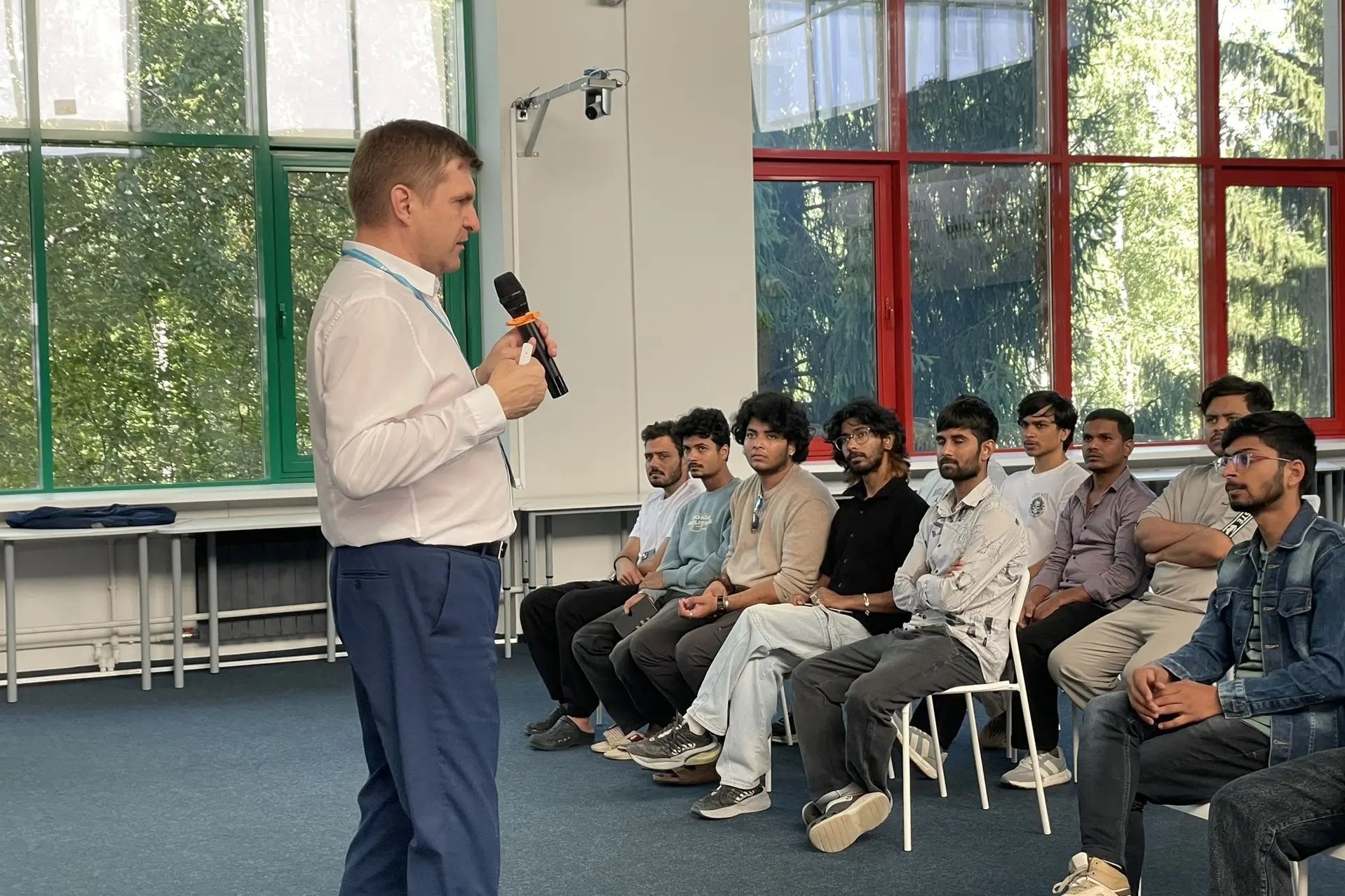
Derzhavin University hosted a lecture series for international students covering the history of Russian statehood and media literacy. More than 100 international students from India and African countries attended the lectures.
The project was organized by the Center for Social Adaptation and Intercultural Communication of the Department of International Relations at Derzhavin Tambov State University, in partnership with the Russian Knowledge Society (*Znanie*).
The initiative aims to deepen understanding of Russia’s history and culture and to facilitate the successful integration of foreign nationals into the Russian socio-cultural environment.
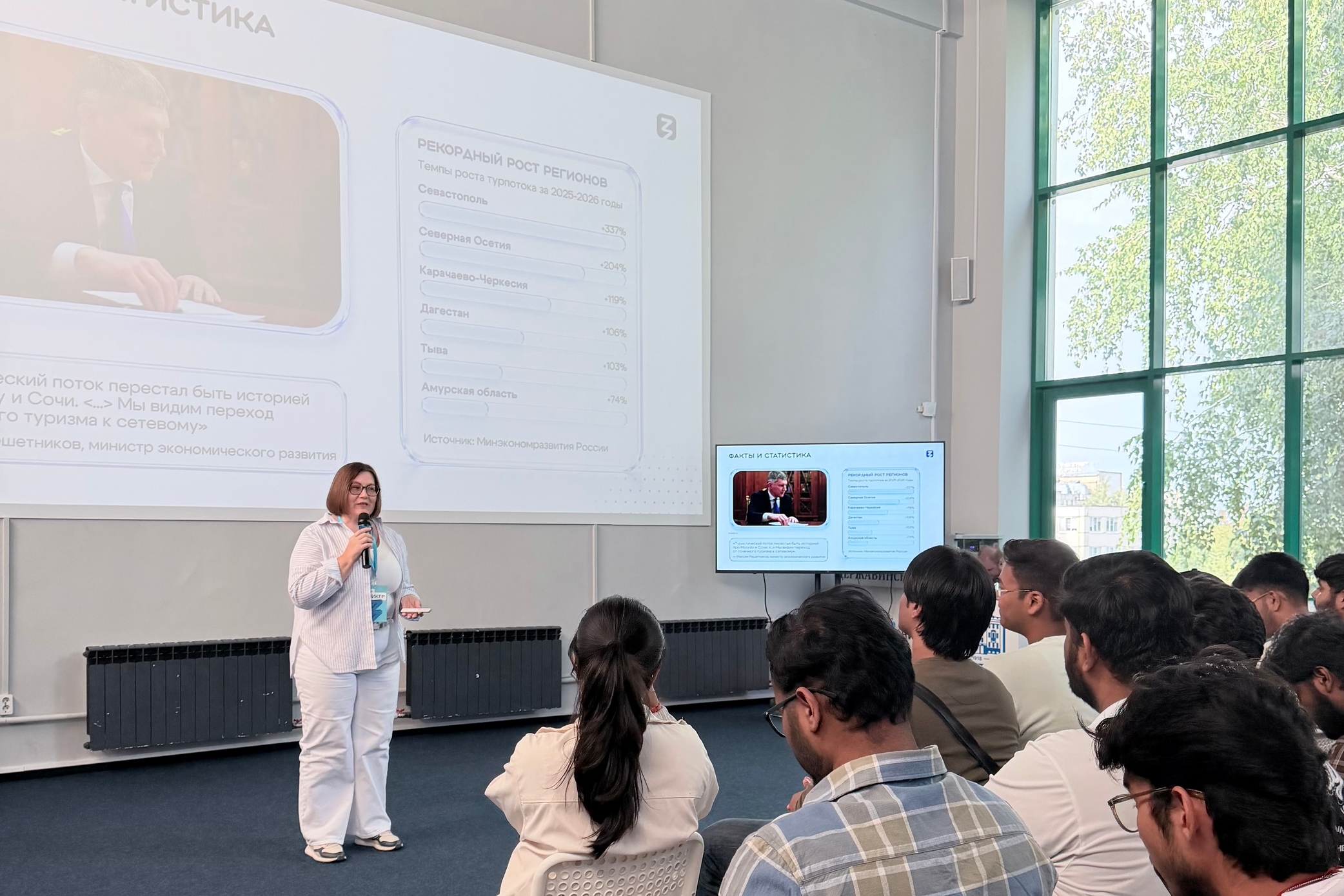
The program opened with a presentation on domestic tourism in Russia by Vera Menshchikova, a lecturer for the Russian Knowledge Society and an Associate Professor at Derzhavin University (Candidate of Economic Sciences). Students embarked on a virtual journey, exploring a wide range of regional tourist routes and the country's major landmarks.
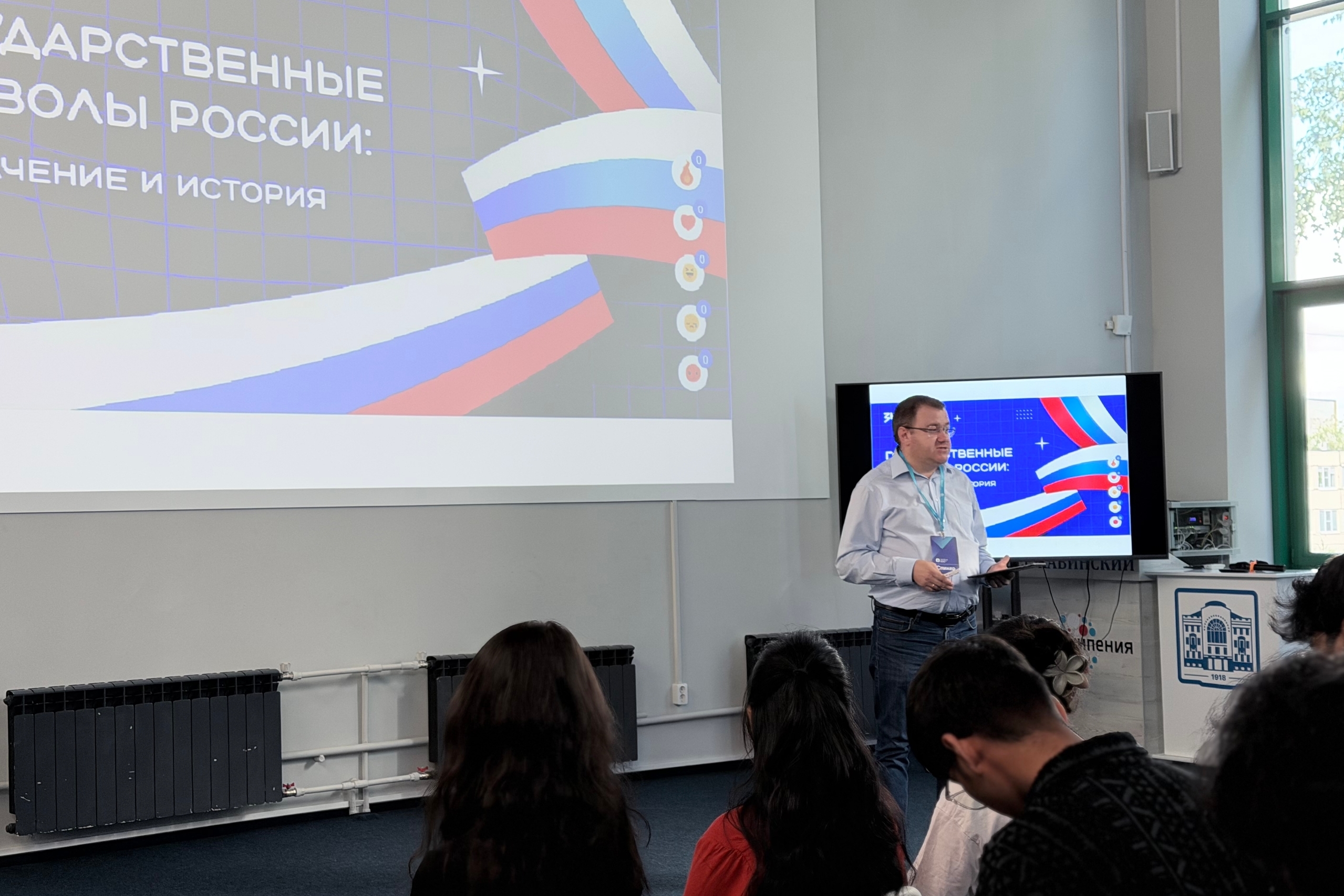
The audience showed particular interest in a lecture on Russia’s state symbols—their history and significance—delivered by Sergey Khomutinkin, an expert with the Russian Knowledge Society and an Associate Professor at Derzhavin University (Candidate of Historical Sciences). Attendees learned about the history of the national flag, coat of arms, and anthem, as well as the role these symbols play in the life of the country.
Andrey Prokhorov, a lecturer for the Russian Knowledge Society and an Associate Professor at Derzhavin University (Doctor of Philosophical Sciences), addressed the topic of information security. In his lecture, "Media Consumption: How to Control Information Flows," he outlined current methods for handling information in the modern world. Participants learned practical techniques for verifying information sources and consuming media content consciously.
The sessions were conducted as open dialogues, with students actively asking questions, discussing real-life examples, and sharing their own experiences. The audience saw Russia from a new perspective: they learned more about its cultural and historical diversity and gained a deeper understanding of the cultural code of the country where they live and study.