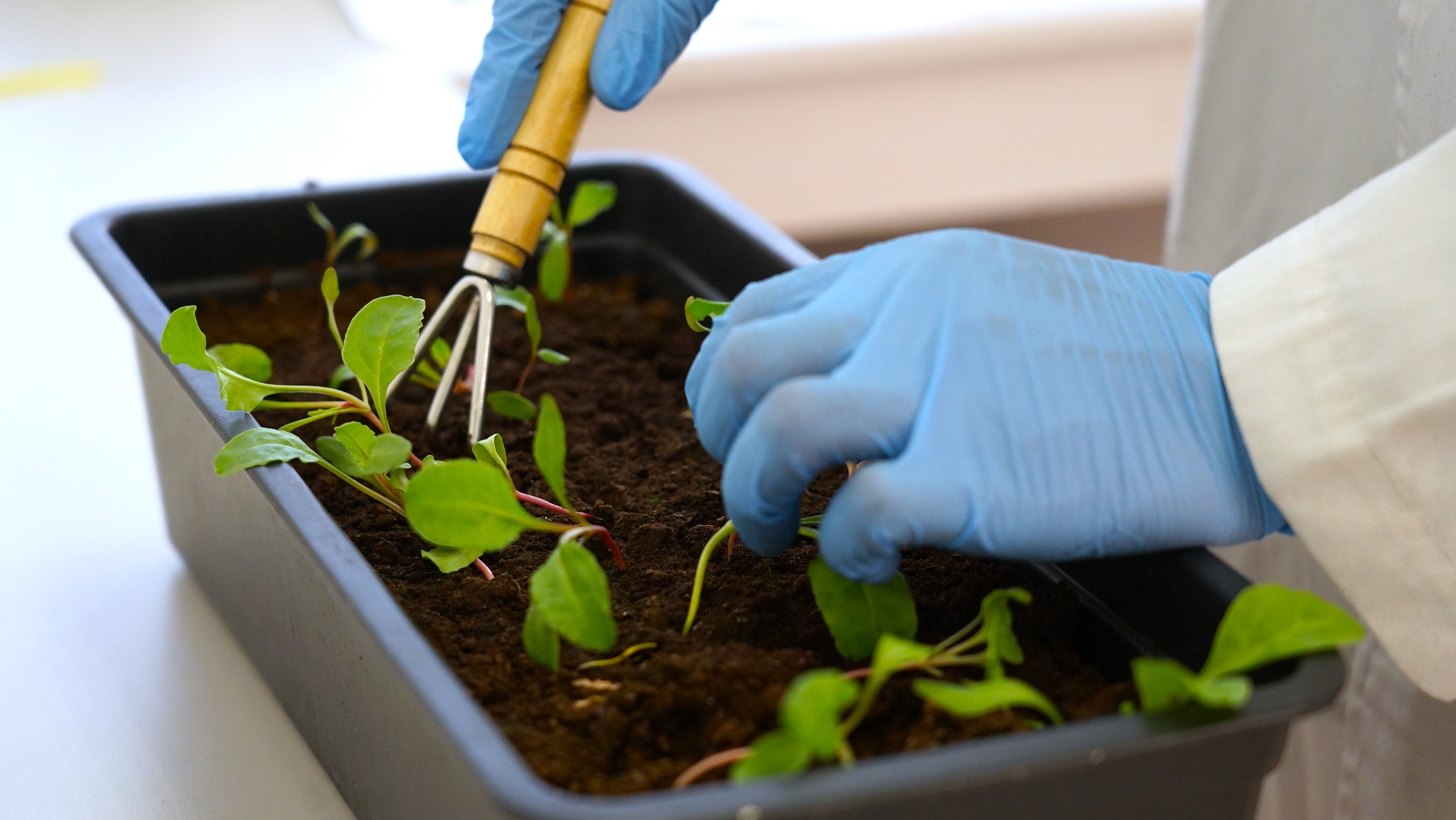
Scientists from the G.R. Derzhavin Tambov State University have demonstrated that using metallurgical sludge as a fertilizer can increase sugar beet yields by 50 percent without compromising safety.
According to the researchers, blast furnace sludge—a large-scale waste product from the ferrous metallurgy industry—can serve as an effective source of iron and zinc for sugar beets. When applied in moderate doses, the material significantly increases root crop yields and sugar content, while reducing oxidative stress in plant tissues. At the same time, toxic element concentrations in the product remain at safe levels.
According to Derzhavin University scientists, blast furnace sludge is formed during the wet scrubbing of gases in blast furnace production. Millions of tons of this waste accumulate worldwide annually, primarily stored in settling ponds. The sludge contains a lot of iron and zinc—micronutrients critical for plant growth—but its direct use in agronomy has so far been constrained by concerns about toxicity.
"The sample we studied is highly dispersed: the particles are very small, from hundreds of nanometers to tens of micrometers," says Olga Zakharova, head of the Ecology and Biotechnology Research and Education Center at Derzhavin University. "Due to their high specific surface area, these particles are able to slowly dissolve in the soil, gradually releasing iron and zinc. We decided to test whether this waste could be converted into a micronutrient fertilizer for sugar beets, as zinc is known to improve carbohydrate metabolism and accelerate the conversion of simple sugars into sucrose." In a pot experiment, a low sludge concentration in the cultivation substrate yielded the best results: sugar beet root and leaf mass increased significantly, while the activity of two enzymes—polyphenol oxidase and peroxidase, which serve as markers of oxidative stress—decreased severalfold. This suggests that the sludge not only nourishes the plant but also mitigates stress caused by adverse environmental factors.
"In a field experiment on neutral soils, applying sludge at the optimal range increased beet yield and root sugar content by almost 50% compared to the control," explains Olga Zakharova. "Furthermore, the treated plants had virtually no necrotic spots on the leaves, while the control plants suffered from chlorosis and tissue death. Higher sludge doses provided no additional agronomic benefit, confirming the existence of a most effective application range." The study's authors analyzed the accumulation of heavy metals in leaves, roots, and soil. The toxic element content in beets remained at control levels and significantly below Russian and international standards.
"Zinc accumulation in the roots was almost nonexistent—its concentration was an order of magnitude lower than the permissible threshold," notes Olga Zakharova. "However, with repeated annual application of sludge, zinc levels in the soil can gradually increase, so systematic monitoring is necessary." Furthermore, indirect effects were discovered: even in the absence of copper and cobalt in the sludge itself, their concentrations in the soil increased with high application rates. Iron oxides, present in large quantities in the sludge, likely act as sorbents and accumulate these elements from the environment.
According to the scientists, recycling blast furnace sludge into micronutrient fertilizer fits into the concepts of a circular economy and green metallurgy. Widespread adoption requires long-term testing on different soil types and crops, as well as standardized procedures for monitoring the sludge composition. The authors note that the proper use of this waste could transform an environmental problem into an effective, sustainable solution for agricultural production.
The study was published in the International Journal of Molecular Science. The research was supported by a state assignment from the Ministry of Science and Higher Education of the Russian Federation.