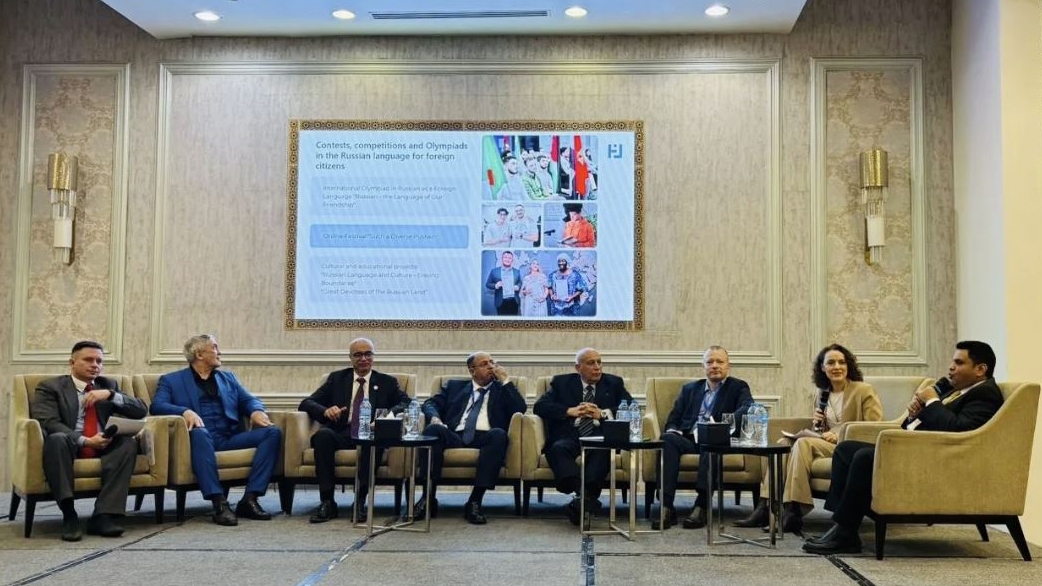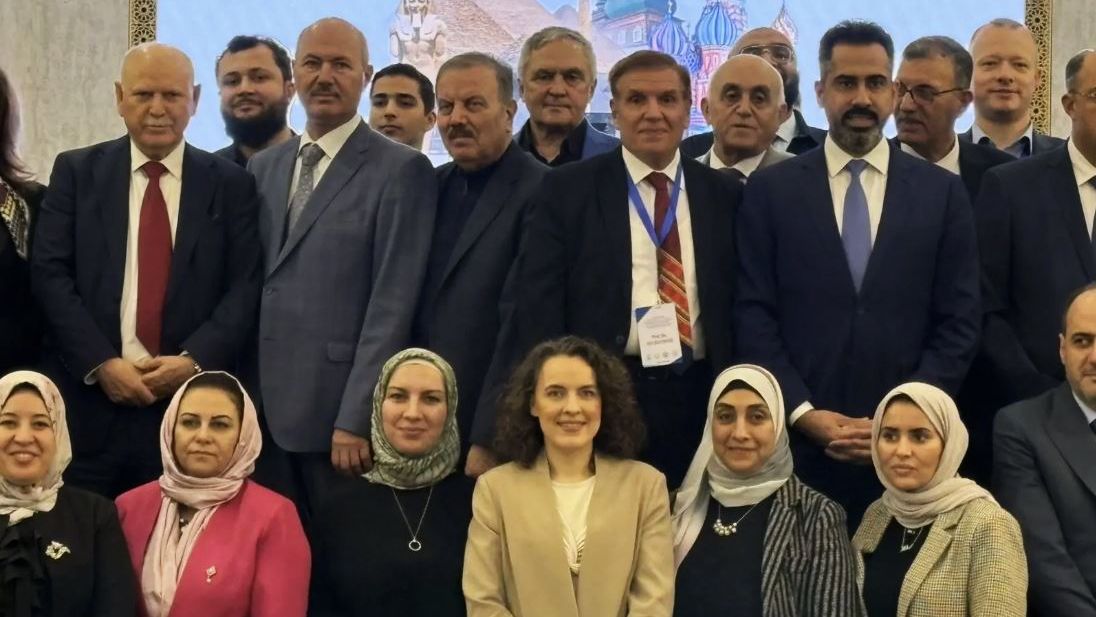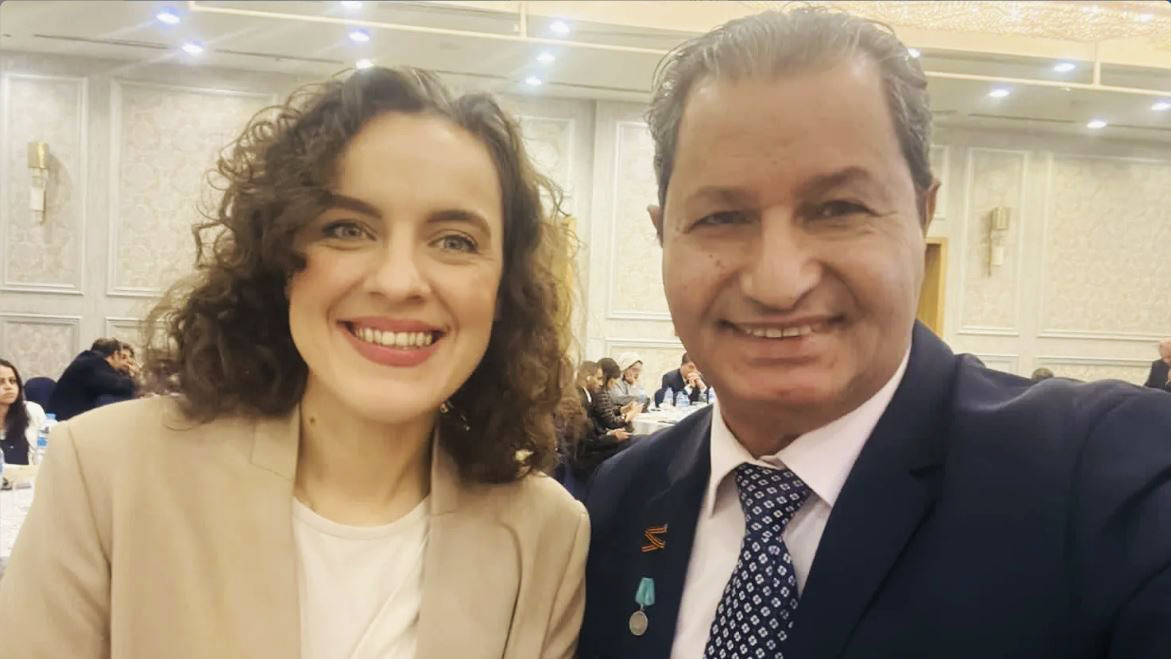
The Fifth Forum of Rectors of Russian and Arab Universities was held in Cairo. Organized by Lomonosov Moscow State University, the forum was attended by over 250 heads of higher education and research institutions from both countries. The Russian delegation, along with heads of universities from Nizhny Novgorod, Moscow, Belgorod, and the Chechen Republic, included Elena Zueva, Vice-Rector for International Affairs at Derzhavin University. The Arab side was represented by delegates from universities in Egypt, Algeria, Tunisia, Jordan, Yemen, Lebanon, and Iraq.
The forum was dedicated to current issues of scientific and educational cooperation and inter-university collaboration, including promising joint research in space technology and artificial intelligence. Welcoming remarks were given by the Ambassador of the Russian Federation to the Arab Republic of Egypt, Georgy Borisenko; Deputy Minister of Science and Higher Education of the Russian Federation, Konstantin Mogilevsky; President of the Association of Arab Universities, Professor Amr Ezzat Salama; Minister of Higher Education and Scientific Research of the Arab Republic of Egypt, Mohamed Ayman Ashour; and Rector of Helwan University, Elsayed Mohamed Qandil.
The Forum included plenary sessions and thematic sessions. At a thematic session devoted to the study of the Russian language, Tambov State University named after G.R. Derzhavin presented its resources for studying Russian for an Arabic-speaking audience. Derzhavin University places particular emphasis on the dissemination and implementation of modern methods of teaching Russian as a foreign language abroad, the active use of linguocultural aspects in mastering the Russian language, and the creation of the most optimal and flexible conditions for its study among international students. Guided by these priorities, Derzhavin University has created one of the best innovative projects for promoting the Russian language for Arabic-speaking students, according to the Russkiy Mir Foundation. This is the digital educational resource "Russian Language. Beginning." It is an open internet portal that integrates various information systems and online services. Designed for Arabic-speaking students, this online educational resource is filled with educational content that meets the requirements of the introductory phonetic and elementary levels of proficiency in Russian as a foreign language. It is the only nationally-focused electronic resource freely accessible to users without special registration.
With this resource, students can independently learn to read, write, and type using an integrated online keyboard with a Russian layout, as well as master basic vocabulary and grammar and become familiar with speech etiquette. "Russian Language. Beginning" has become an example of implementing an effective digital educational environment using new technical capabilities for organizing learning, simple and intuitive tools for creating educational content, and various digital linguodidactic materials for the Arab world. The resource's materials are actively used in in-person and online Russian language teaching formats and also serve as a platform for interaction with educational institutions in Arab countries. The resource's popularity is evidenced by the website's statistics—over 11,000 visits over the past year.
"My presentation generated genuine interest among my Arab colleagues, which translated into establishing essential contacts with universities in Lebanon, Tunisia, Iraq, Yemen, and Egypt interested in studying Russian. There is a particular demand for online resources for studying Russian as a foreign language," noted Elena Zueva, Vice Rector for International Affairs at Derzhavin University. A clear example of how the Russian language is spreading across the globe, thanks to the help of Derzhavin University, is the recognition and widespread use of our philologists' textbook, "About Russia in Russian," in Russian language study centers abroad and preparatory departments at Russian and foreign universities, for example, in Algeria, Tanzania, South Africa, Ghana, Uganda, Gambia, Uzbekistan, Kyrgyzstan, Kazakhstan, India, and several other countries. Our university is open to collaboration with educational and cultural-linguistic centers and is also willing to share methodological and technical solutions, including the development of similar resources with universities in the Arab world.
Currently, more than 2,400 foreign citizens from 60 countries are studying at Derzhavin University. Of these, more than 1,000 are students from Arab states such as Algeria, Egypt, Jordan, Iraq, Yemen, Lebanon, Morocco, and others. Over the past 10 years, nearly 3,500 foreign citizens have graduated from the university and successfully mastered the Russian language.