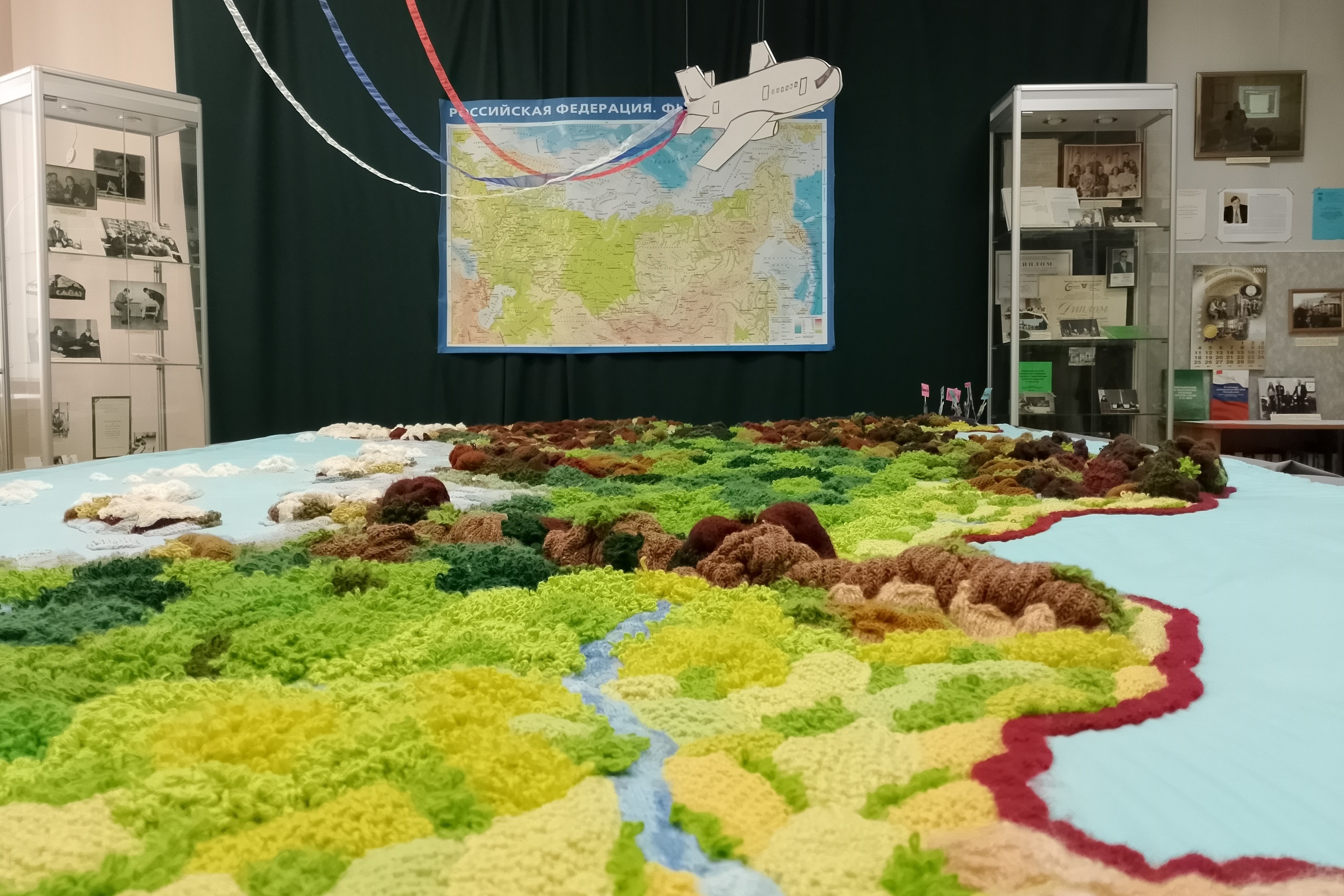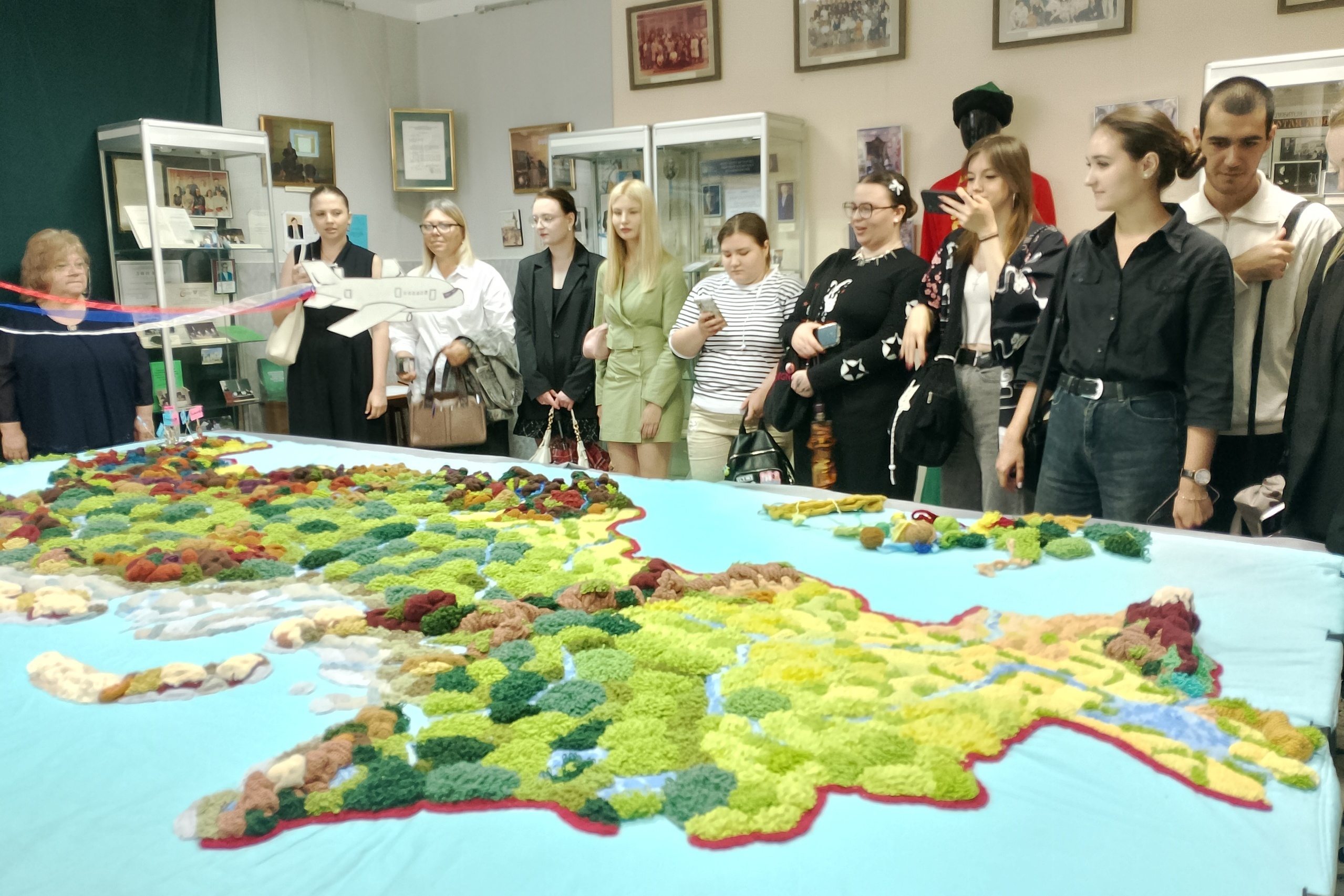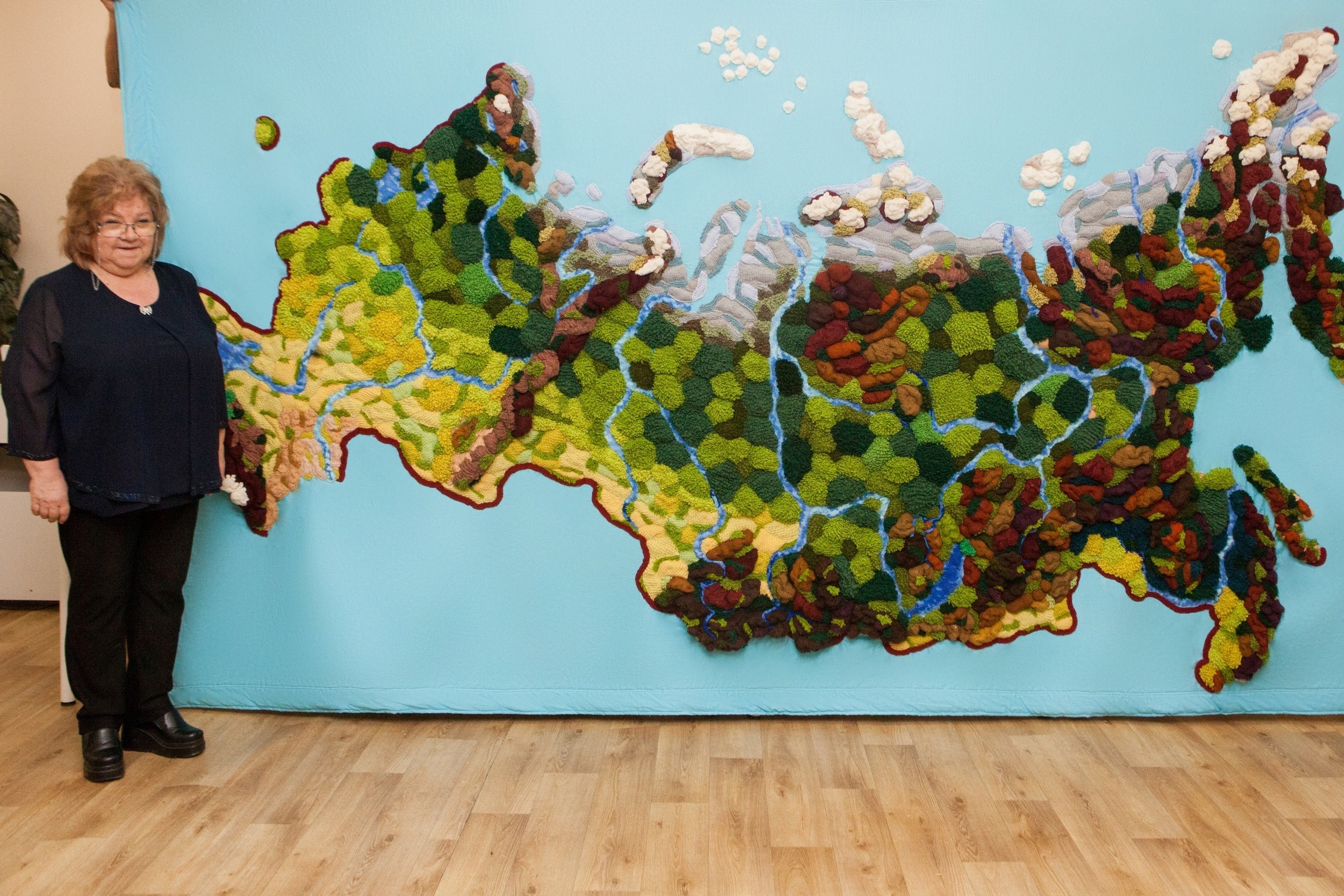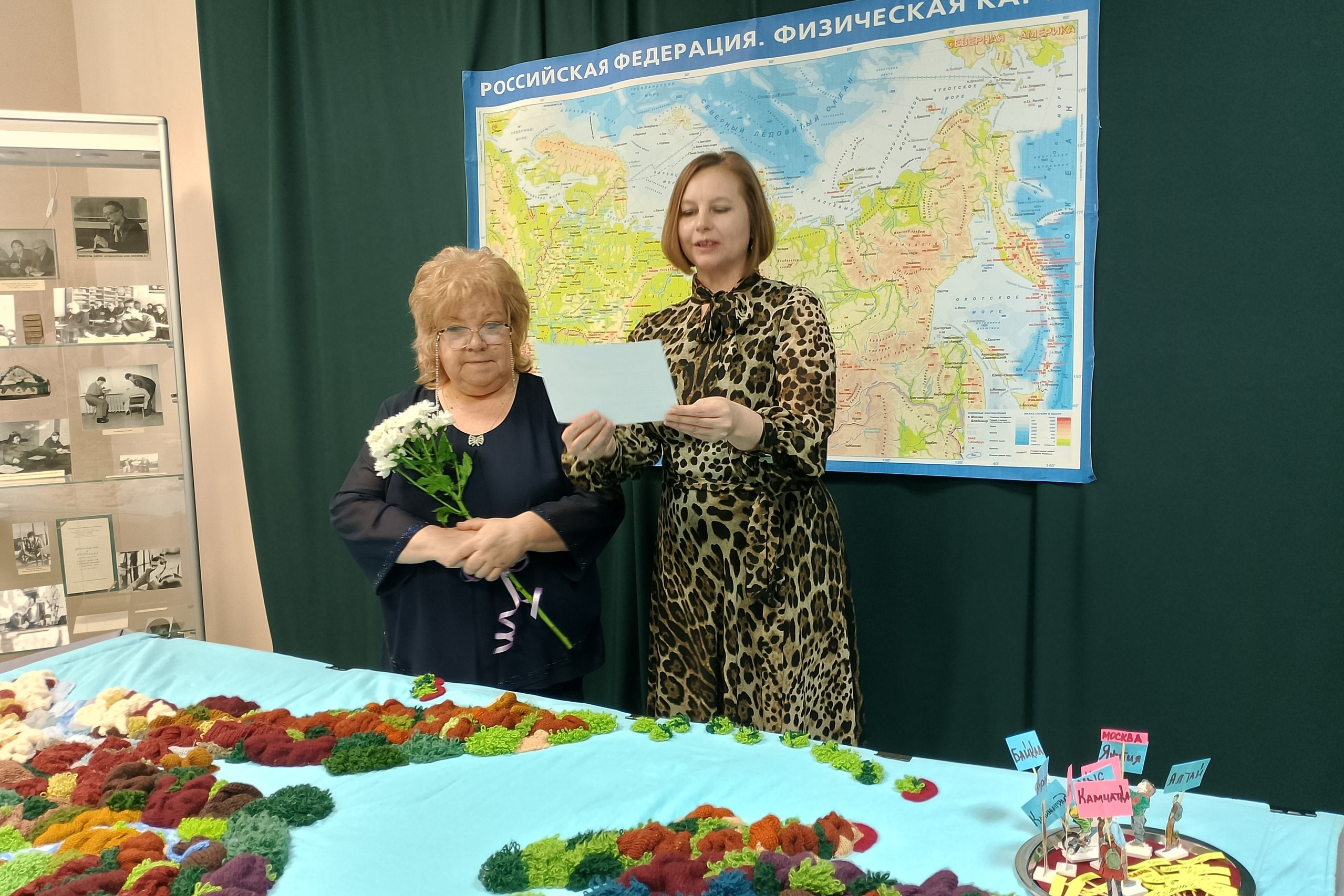
The Knitted Map of Russia exhibition is open at the Derzhavin University Museum and Exhibition Complex, where a unique exhibit is presented that has set a record on a national scale. The first 3D knitted map of Russia is a project by Galina Pogulyayeva, a resident of the town of Rasskazovo in the Tambov Region, and Marina Elyutina, an employee of the University museum.
The map was included in the Register of Russian Records. Experts from the International Record Registration Agency Interrecord reviewed the application with the submitted materials and registered the record in the nomination The Largest Knitted Map of Russia in 3D Format.
It took two years of painstaking work to create the original exhibit - from the birth of the idea, the creation of control samples and the selection of a diverse palette of yarn shades to the presentation of the finished work.
- The main question that arose at the start of the project was which map of Russia to knit? We had a difficult choice. We wanted to take as a basis a map of subjects, climate, soils, roads, minerals, peoples, flora and fauna, etc. Frankly speaking, I dream of knitting them all, but this is a reserve for the future, - says Galina Pogulyaeva. - This time we decided to opt for a physical map of Russia, to focus on the relief, to combine it with a map of natural zones. Now they are all presented on the map in all their geographical and natural diversity.
The handmade exhibit turned out to be impressive. Its dimensions are 2.5 by 4 meters. The base is 90% made of yarn produced in Rasskazovo, the rest is made of materials from other domestic manufacturers. The knitters' main working tool was knitting needles from a unique collection, which contains needles and hooks used by Russian needlewomen over the past 100 years.
According to the craftswomen, the basis for the map was cotton fabric, on which the contours and boundaries of objects were fixed. In total, more than 2,000 fragments were knitted using various techniques, which were combined and folded into a complex relief. The total yarn consumption was 10 kilograms.
On the map, long stripes symbolize the main waterways of the country - the Volga, Oka, Yenisei, Lena, Irtysh, Ob and Kama. The total length of the rivers on the knitted map exceeds 15 meters. The flora is richly and diversely represented. These are several hundred objects knitted from many shades of yarn. The knitted map also shows the largest mountain peaks, hills and plateaus, steppes and forest-steppes, deserts and semi-deserts, tundra and arctic zones. Natural landscape objects are created on knitting needles using the hand techniques of "stocking knitting", "loop" and "braid".