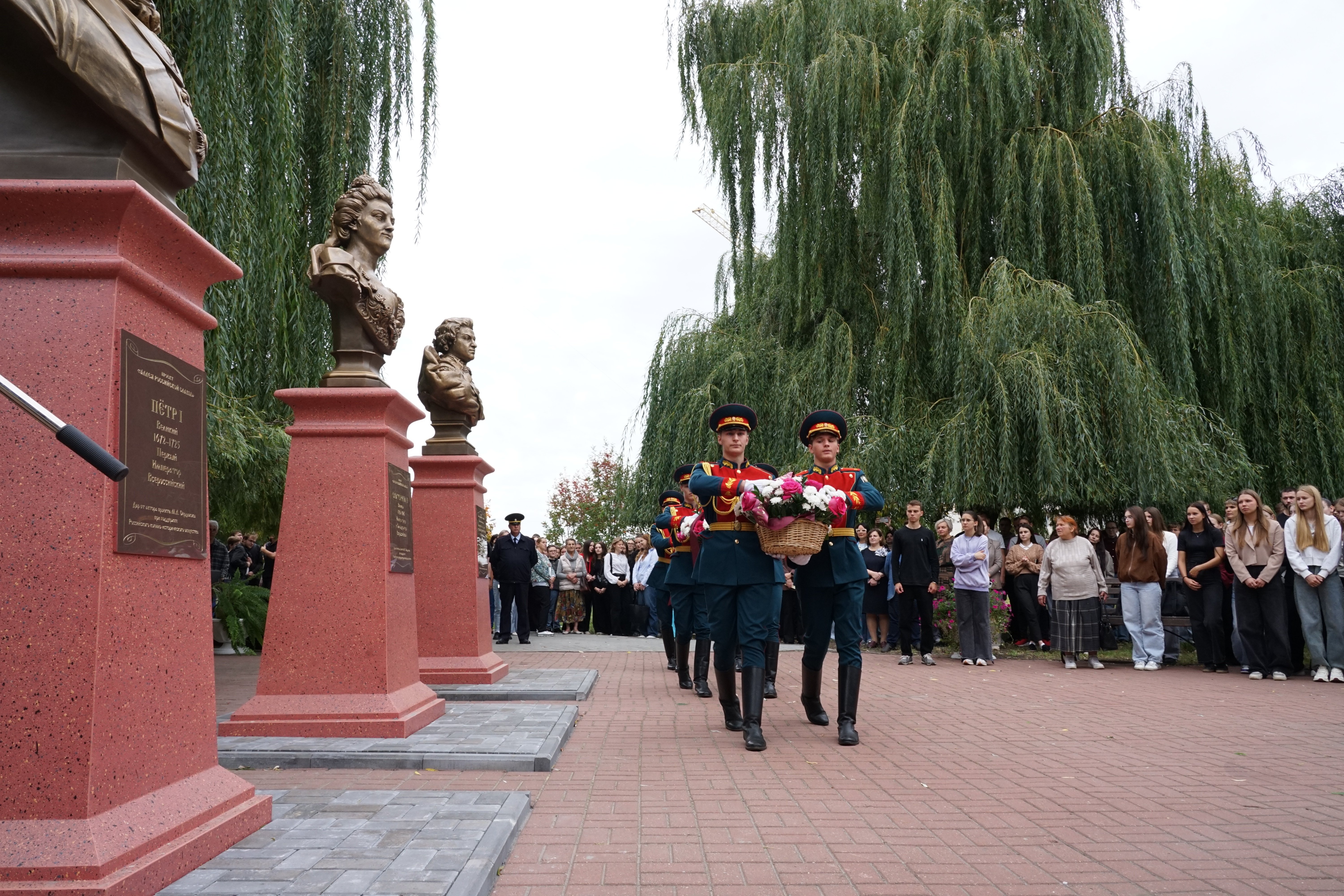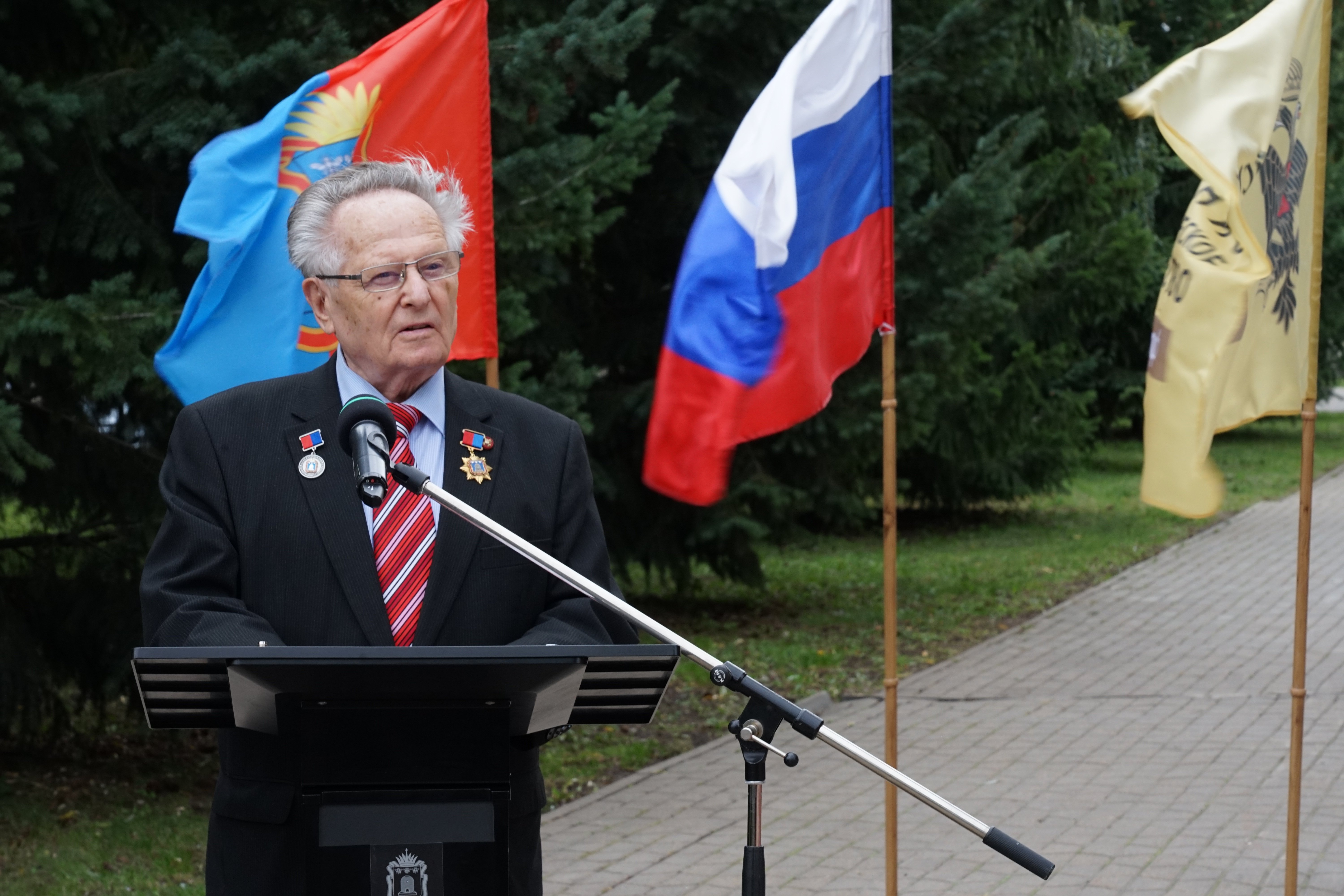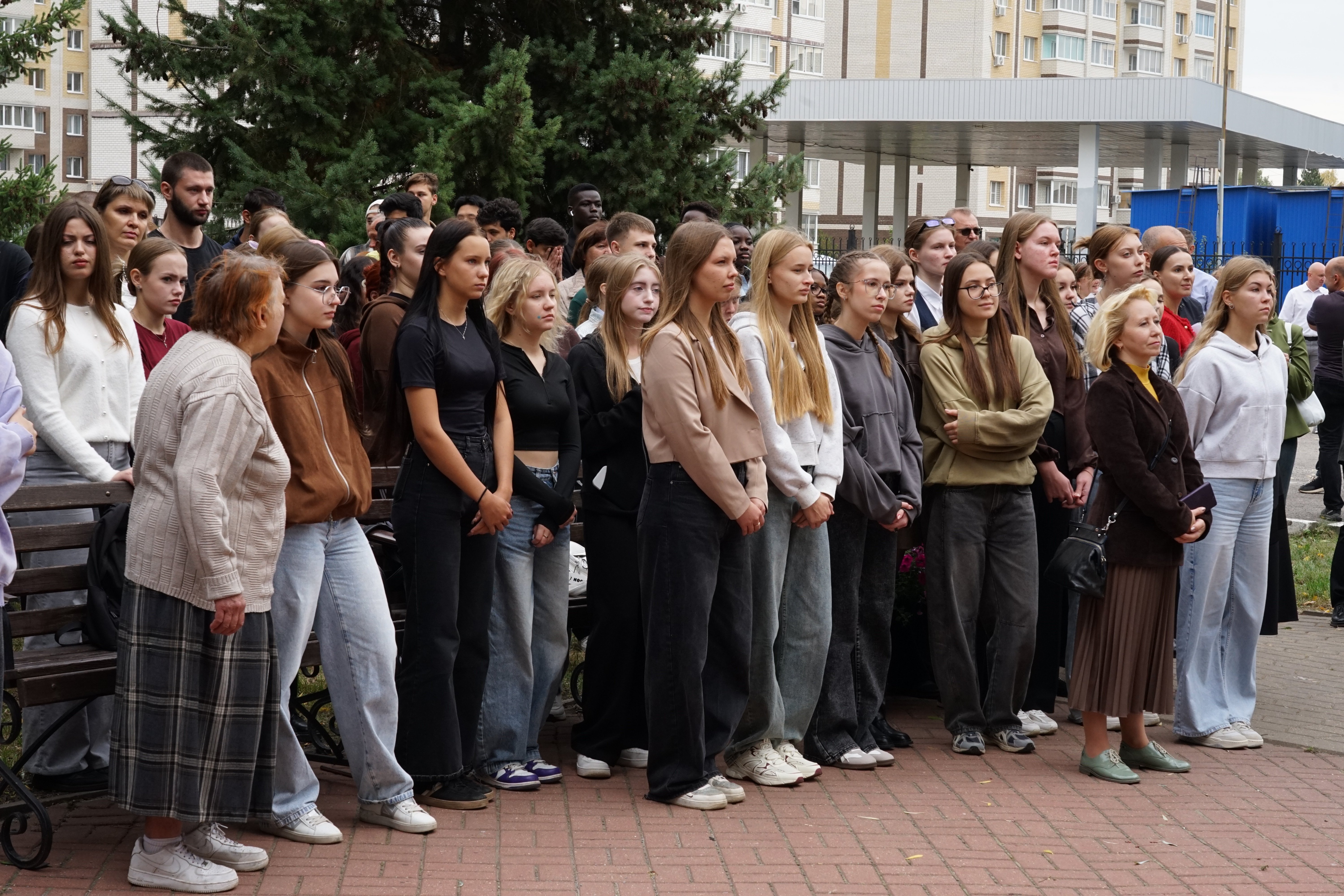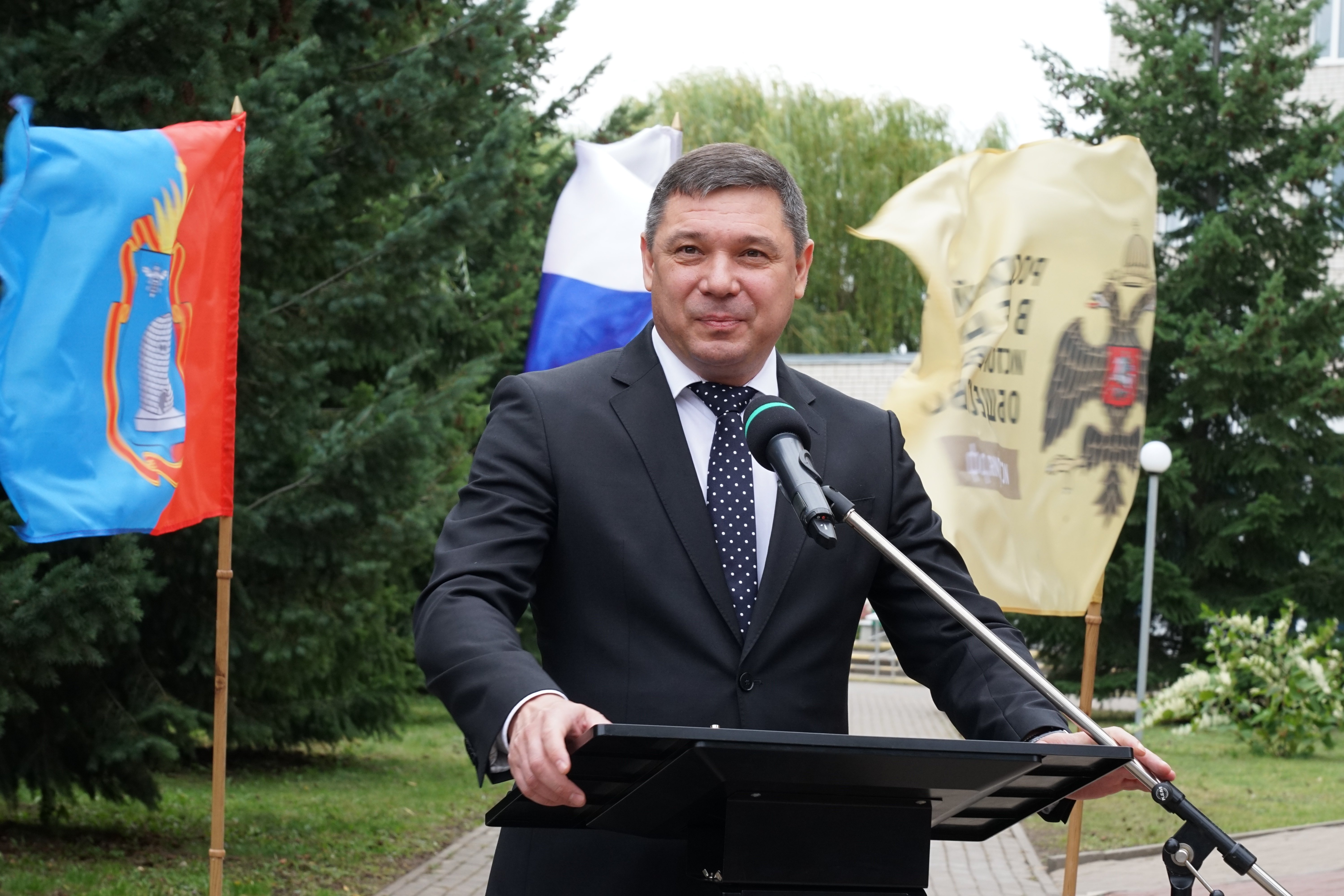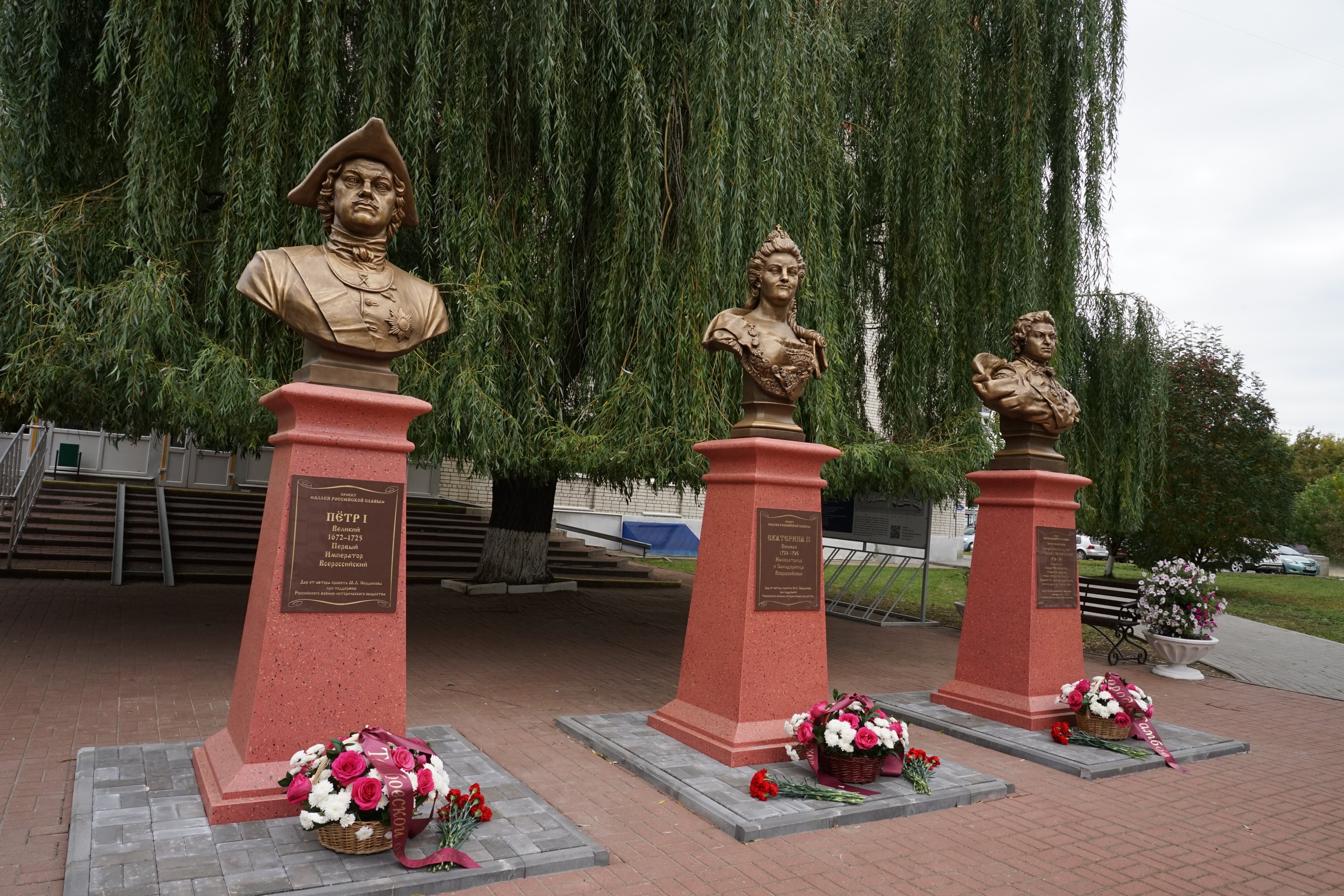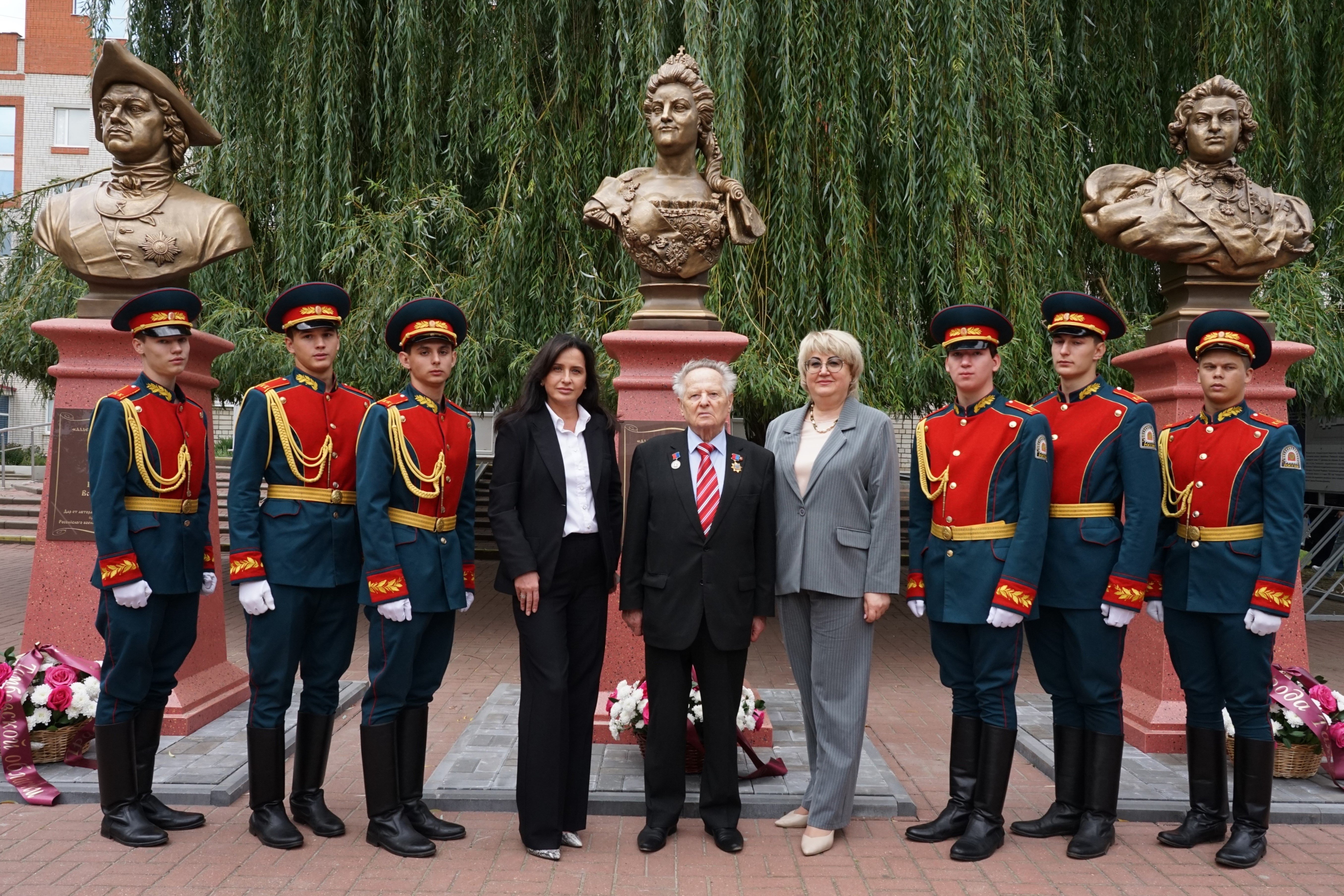
Busts of prominent Russian statesmen—Peter the Great, Empress Catherine II, and her close associate Prince Grigory Potemkin-Tavrichesky—have been installed on the grounds of Derzhavin University, next to the academic building housing the Faculty of History, Political Science, and Philology. The event was timed to coincide with the anniversary of the founding of the Tambov Region.
The primary goal of creating this new gallery of sculptural portraits is to preserve historical memory and generational continuity, as well as to spark interest among young people in the study of national history.
"These three busts are a tribute to our great history and the Age of Enlightenment. The names of these Russian statesmen are linked to sweeping socio-economic transformations, the advancement of science and the arts, the defense of our frontiers, and the expansion of the Russian Empire's borders," said Yevgeny Pervyshov, Head of the Tambov Region.
During the unveiling ceremony, the regional leader noted the upcoming celebration of the 250th anniversary of the establishment of the Tambov Viceroyalty. The official creation of this administrative-territorial unit was formalized by a decree from Catherine II in 1780 as part of the provincial reform; at that time, it comprised 15 *uyezds* (districts). The Empress also approved the coats of arms for the cities within the Tambov Viceroyalty.
Each sculpture stands over three meters tall and weighs more than two tons. The sculptures are complemented by concise inscriptions on the pedestals that succinctly capture the unique contributions these historical figures made to strengthening the Russian state.
The cultural and patriotic project was initiated by Rostislav Medinsky, Advisor to the Chairman of the Russian Military Historical Society, and the idea was supported by the Government of the Tambov Region. The monuments were installed as part of the "Alley of Russian Glory" project, implemented by patron Mikhail Serdyukov with the assistance of the Russian Military Historical Society (RVIO).
"The name of Peter the Great is linked to major state reforms that changed Russia forever. Thanks to the collaborative efforts of Empress Catherine II and her closest associate, Prince Grigory Potemkin, the country strengthened its southern borders, established a firm foothold on the Black Sea, and began actively developing Crimea and Novorossiya," noted Rostislav Medinsky. "Each monument offers an opportunity to reflect on our historical past and to realize that we are all citizens of a great power, united by a shared aspiration for the prosperity of our Fatherland."
The site chosen for the monuments is significant. Derzhavin University is one of the region's leading educational institutions, training future historians, local history experts, and political scientists whose professional work focuses on preserving the memory of distinguished compatriots.
"The Russian Military Historical Society collaborates closely with the Tambov Region and does a great deal to honor the names and deeds of our ancestors—who served the glory of the Fatherland—within the cityscape of Tambov. Derzhavin University has now become part of this major and important mission," said Yana Radyukova, Vice-Rector for Education, Youth Policy, and Student Affairs at Derzhavin University. "It is symbolic that monuments to these outstanding 18th-century statesmen—builders of the Russian state and architects of its political, military, and cultural might—are located next to the Faculty of History building. For over a century, the Faculty of History has served as the foundation for historical education and enlightenment in the Tambov region. I am confident that these busts will become more than just part of the architectural landscape for students; they will stand as a symbol of generational continuity and a meaningful guiding light."