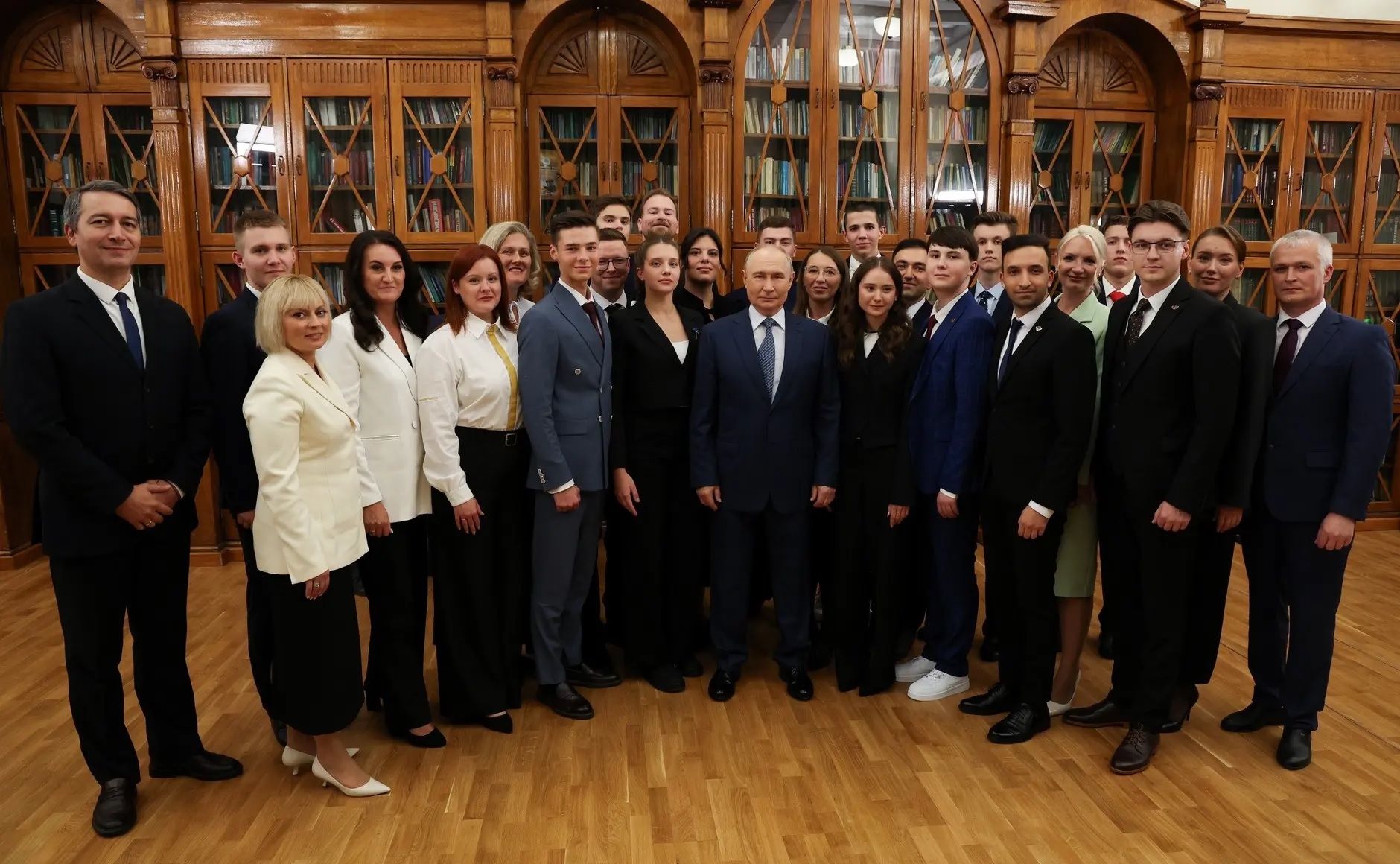
During a visit to Moscow Pedagogical State University, Vladimir Putin met with teachers, students from specialized universities, and pupils from pedagogical classes. Among the participants was Rashid Nadirov—a graduate of the G.R. Derzhavin Tambov State University, a prize-winner of the 2025 "Teacher of the Year of Russia" contest, and a history and social studies teacher at Secondary School No. 30 in Tambov.
Rashid Nadirov, the representative from the Tambov Region and a Derzhavin University alumnus, boasts numerous professional achievements. He is a member of the Federal Council for the Development of Mentorship under the Ministry of Education of the Russian Federation, a teacher of the highest qualification category, an expert grader for the Unified State Exam (EGE) in history, and a laureate of many professional excellence competitions—including being the overall winner of the regional stage of the "Teacher of the Year of Russia" contest.
"It is a tremendous honor for me to take part in a meeting with the President of Russia, Vladimir Vladimirovich Putin. Events like this leave a deep impression on every educator's soul. I would like to note that the dialogue took place in a warm and genuinely trusting atmosphere, set by the Head of State himself from the very first minutes of the conversation," says Rashid Nadirov. "We—teachers from various regions—were able to discuss the issues that matter most to us with the Head of State: raising the prestige of the profession, strengthening the status of educators, and expanding support measures. Vladimir Vladimirovich’s words were particularly memorable: he stated that no modern technology or artificial intelligence could ever replace the living word of a teacher and mentor. He emphasized our key mission—teaching a child to think independently and navigate the vast flow of information. Hearing such an assessment from the country's president is priceless." The meeting served as a powerful impetus and a confirmation that the work of teachers is truly valued at the highest level. It is inspiring to realize that our shared endeavor is a focus of state attention.
At the meeting, the Head of State emphasized the special significance of the conversation with educators and students on the eve of the Day of Knowledge—an occasion that has taken on nationwide importance. Vladimir Putin also highlighted the steadily rising prestige of the teaching profession. According to the President, this is evidenced by both the increased competition for admission to teacher-training institutions (reaching up to nine applicants per spot) and the rise in average Unified State Exam scores among entrants—climbing from the 54–64 range in previous years to 70 points during the 2026 admissions cycle.
Vladimir Vladimirovich recalled the decree he signed that formally established the special status of educators. The document aims to provide comprehensive support for education professionals, including the revival of best practices from the Soviet era—such as the "Veteran of Labor" status. It also provides for expanded opportunities for continuous professional development and retraining, a reduction in administrative burdens, and a range of other innovations. The political leader particularly highlighted the teacher's vital mission: teaching children to think independently. According to the Head of State, amidst the rapid development of information technology and the widespread availability of the Internet—which contains a great deal of unreliable content—it is crucial to help children navigate the information landscape effectively.