On April 2-4, the All-Russian Forum "Family - the Fourth Mission of the University" was held at Derzhavin University. The venue was not chosen by chance. TSU named after G.R. Derzhavin is the operator of the Ministry of Science and Higher Education of the Russian Federation in the field of family policy, preservation and popularization of family values, creation of a comfortable environment in educational institutions of higher education for young student families and studying parents with children within the framework of the Federal Project "Family Support" of the National Project "Family". The stated goal of the forum is to preserve and popularize family values among young people, increase the role of the family in the life of society.
The event was attended by over 200 students of higher education institutions from 36 regions – from the Far East to the western regions of the country and its new territories. The forum was attended by 30 student families, including those with children.
The forum included three sessions: “Young Family – the Present and Future of the State”, “Healthy Family – Healthy Russia”, “History of the Family – History of Russia”, a strategy session, workshops, trainings and business games.
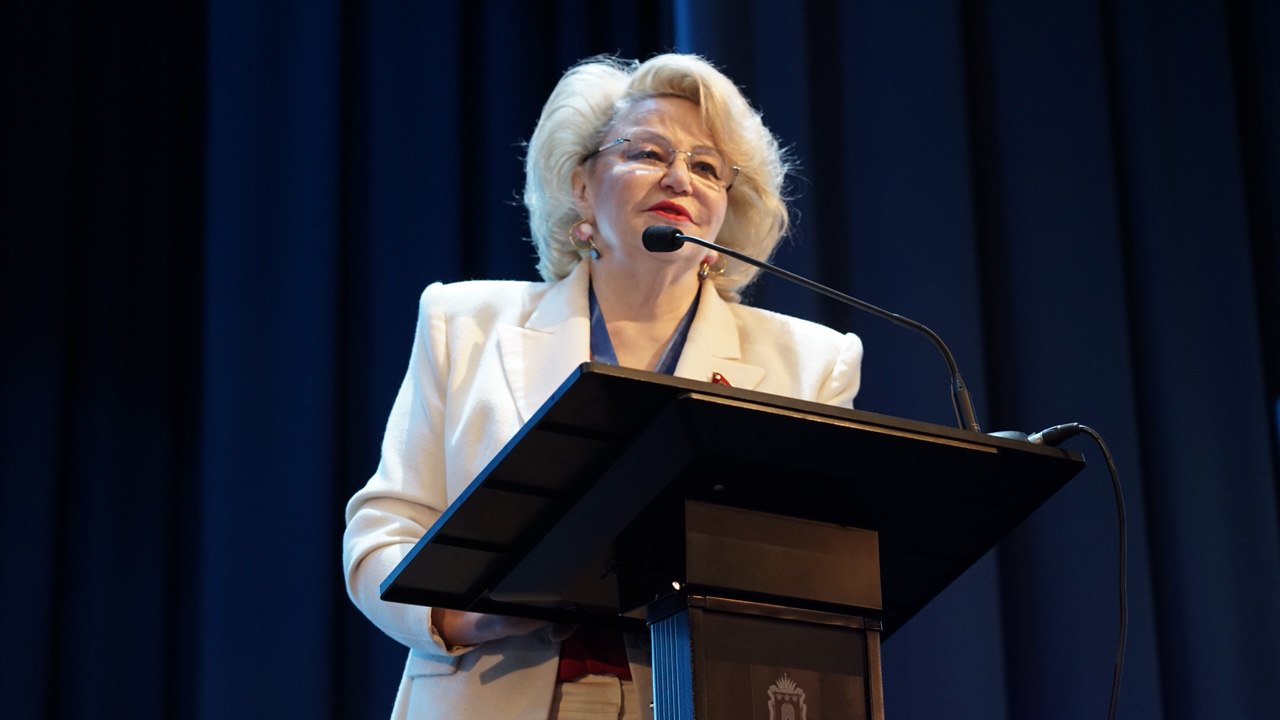
The plenary session was attended by Deputy Minister of Science and Higher Education of the Russian Federation Olga Petrova, Head of the Tambov Region Evgeny Pervyshov, Chairperson of the State Duma Committee on Family Protection, Fatherhood, Motherhood and Childhood Nina Ostanina, State Duma Deputy Tamara Frolova, Rector of Tambov State University named after G.R. Derzhavin Pavel Moiseyev and Deputy Director for Research at the Institute of Demographic Research of the Federal Research Center of the Russian Academy of Sciences, Doctor of Sociology, Professor Tamara Rostovskaya. More than 50 rectors and representatives of the vice-rectors' corps, who gathered at Derzhavin University these days to discuss their pro-natalist tasks, were present in the hall.
– Universities are social institutions responsible for the reproduction of society in their regions, – comments Pavel Moiseev. – Pro-natalist tasks are natural for us. I would suggest considering the efforts of universities to stimulate the birth rate as their fourth mission – no less important than the three traditional missions (educational, scientific and social). The best option would be to give universities the status and functions of full-fledged subjects of state pro-natalist policy. Universities could receive the status of its operators on a competitive basis. The fourth mission is, in essence, a mechanism for adjusting students’ demographic attitudes regarding the birth of their first child during their studies at the university. The result of such an adjustment – a decrease in the age of the birth of the first child – will have a positive demographic effect immediately and many years later – after young families graduate from universities.
At Derzhavin University, demographic work in the interests of the region will be continued by creating a Center for the Study, Scientific Forecasting of Demographic Processes and the Implementation of Demographic Policy, training highly qualified personnel and opening a bachelor's degree program in demography.