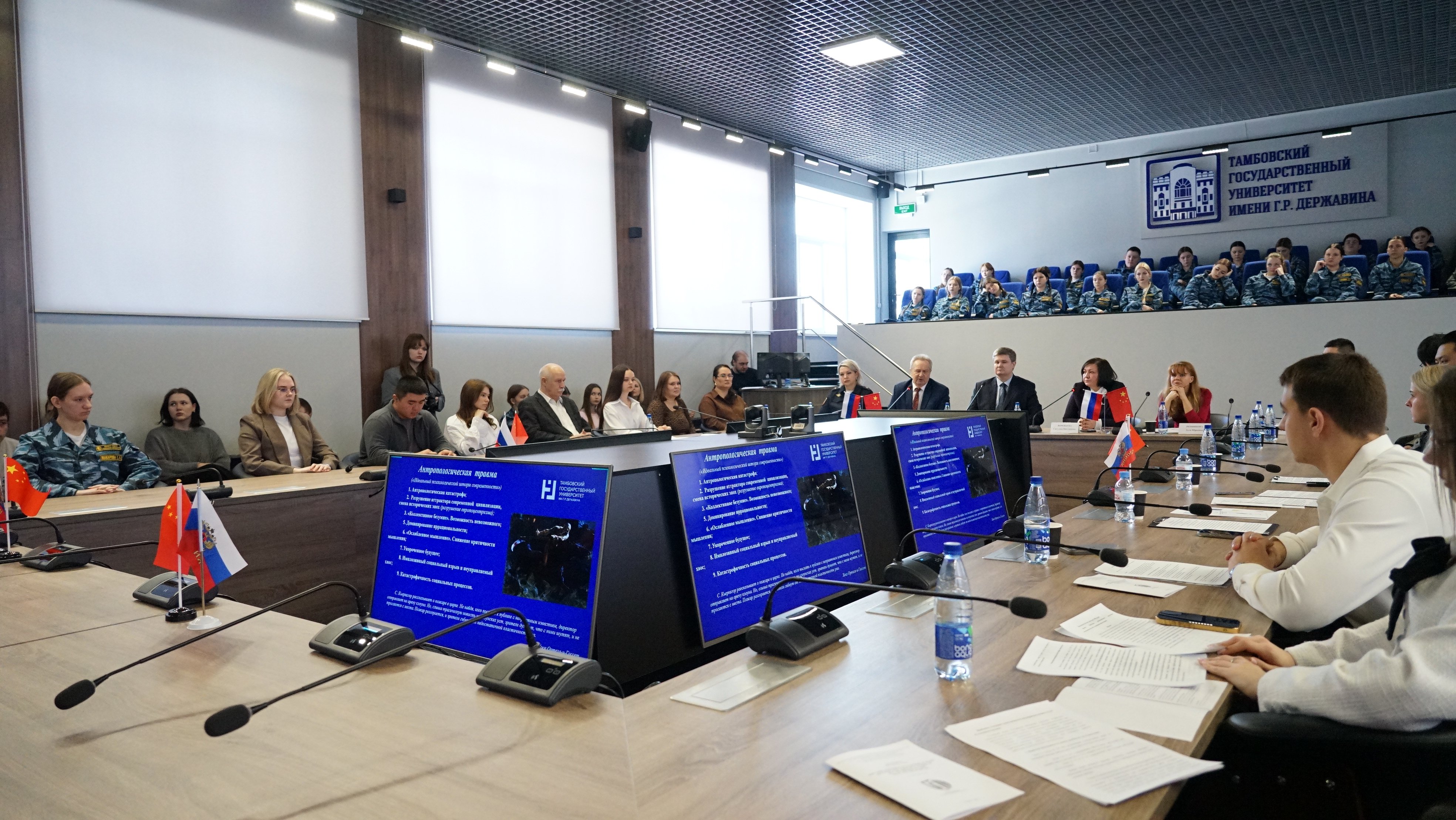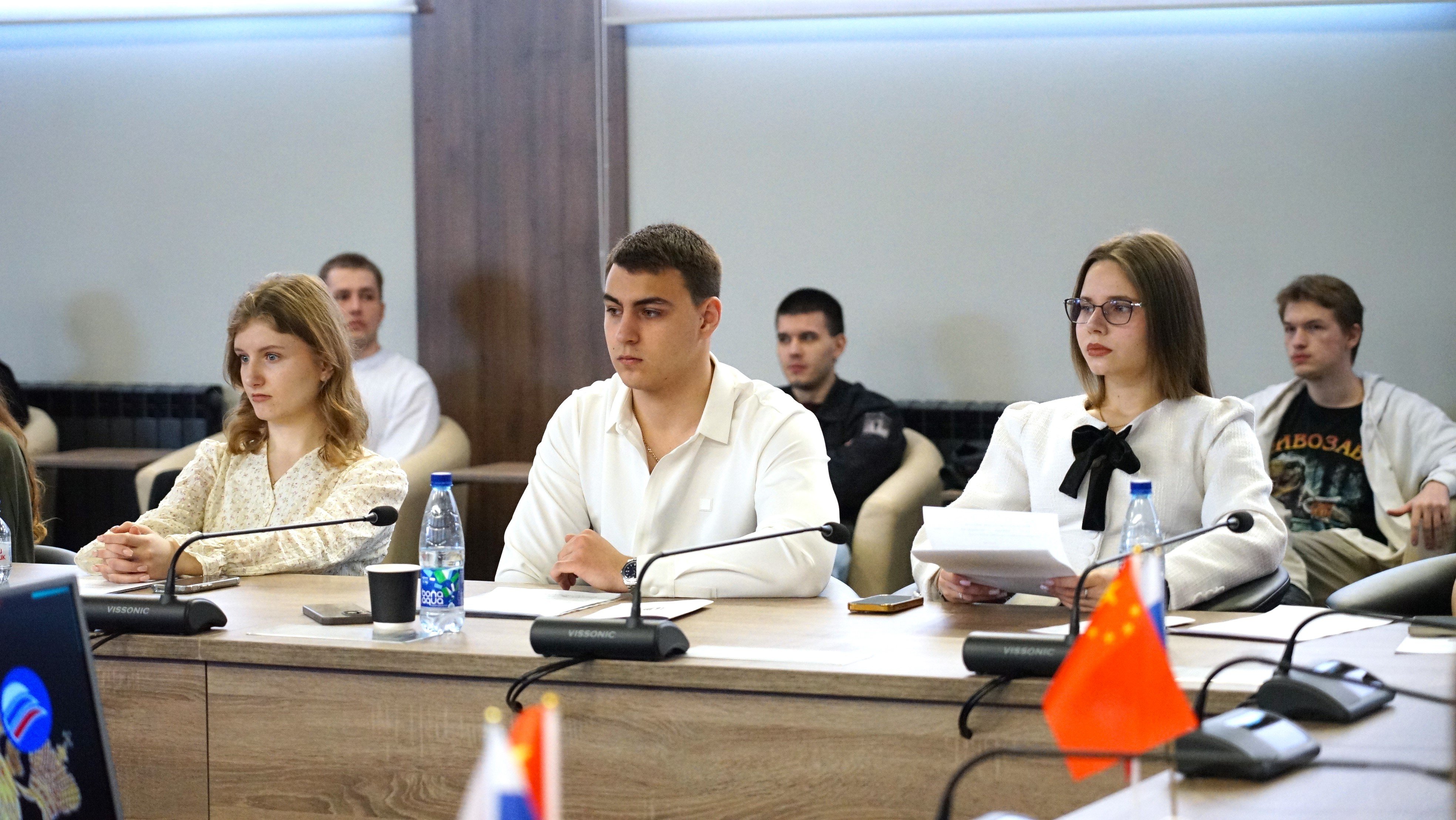
An international roundtable discussion, "Organizational and Legal Framework for Combating Juvenile Delinquency: The Experience of Russia and China," was held at Derzhavin Tambov State University. Experts, representatives of the scientific community of the Russian Federation and the People's Republic of China, law enforcement agencies, public defender’s office, and students from Derzhavin University participated in the roundtable discussions.
According to the results of 2025, an increase in juvenile delinquency was recorded in Russia. Experts believe the figures are alarming, as the share of serious crimes among minors has exceeded 40%, and every second teenager commits illegal acts in group situations. Psychologists speak of a generation without values, living without long-term plans or meaning. Lawyers are seeking a balance between juvenile delinquency prevention and punishment.
- Juvenile delinquency is a pressing social problem that requires studying the causes of adolescent delinquency and developing a range of early prevention measures, - emphasized Alexander Kochetkov, PhD, Associate Professor, Director of the Institute of Law and National Security at Derzhavin University.
At the international meeting, participants discussed public policy in the areas of child protection and the fight against juvenile delinquency, the legal foundations and systems for preventing juvenile delinquency, the psychological causes and consequences of criminal behavior among adolescents, the determinants of juvenile delinquency, and measures to prevent juvenile delinquency online, as well as the specifics of investigating crimes committed by young people.
Chinese participants of the scientific event presented their research papers. Wu Xiaoushai, Professor of the Faculty of Law at Shandong Civil Engineering University and Executive Director of the Shandong Provincial Association for the Study of Juvenile Delinquency (PRC), and Zhang Weiwei, Lecturer at Shandong University of Architecture made reports on the topic in question. According to Chinese experts, China is focusing on a strict three-tiered education system. The country has lowered the age of criminal responsibility to 13, and this is yielding results. Statistics from recent years show that the overall number of juvenile delinquencies in China has stabilized, the proportion of serious crimes has declined, and recidivism rates are under control.
Meanwhile, in Russia, early prevention and social adaptation of adolescents are a priority. Representatives of the legal community are confident that there is no universal solution, as the factors that drive adolescents to commit crimes range from marginalized environments and "broken social mobility" to overprotection, increased parental pressure, and a lack of demand. An individual approach is essential, as well as collaboration between families and schools, parents, and law enforcement. Such collaboration contributes to the development of law-abiding behavior in minors.
At the end of the international roundtable discussion, the participants noted that the situation requires an adequate and prompt response. Open dialogue, exchange of experience, and the development of constructive proposals will be an important step in further cooperation between the two countries to strengthen the system of measures to prevent juvenile delinquency.