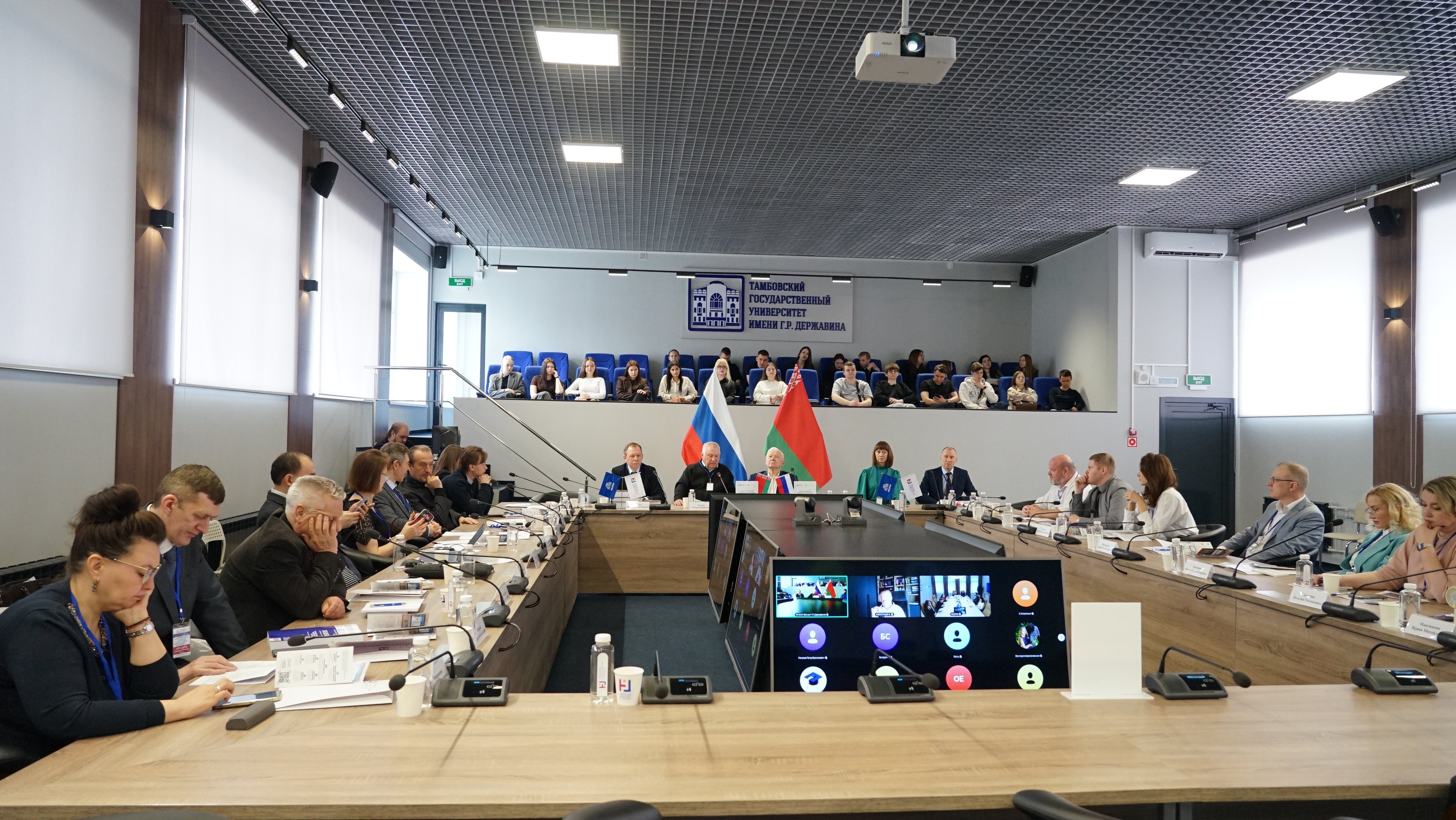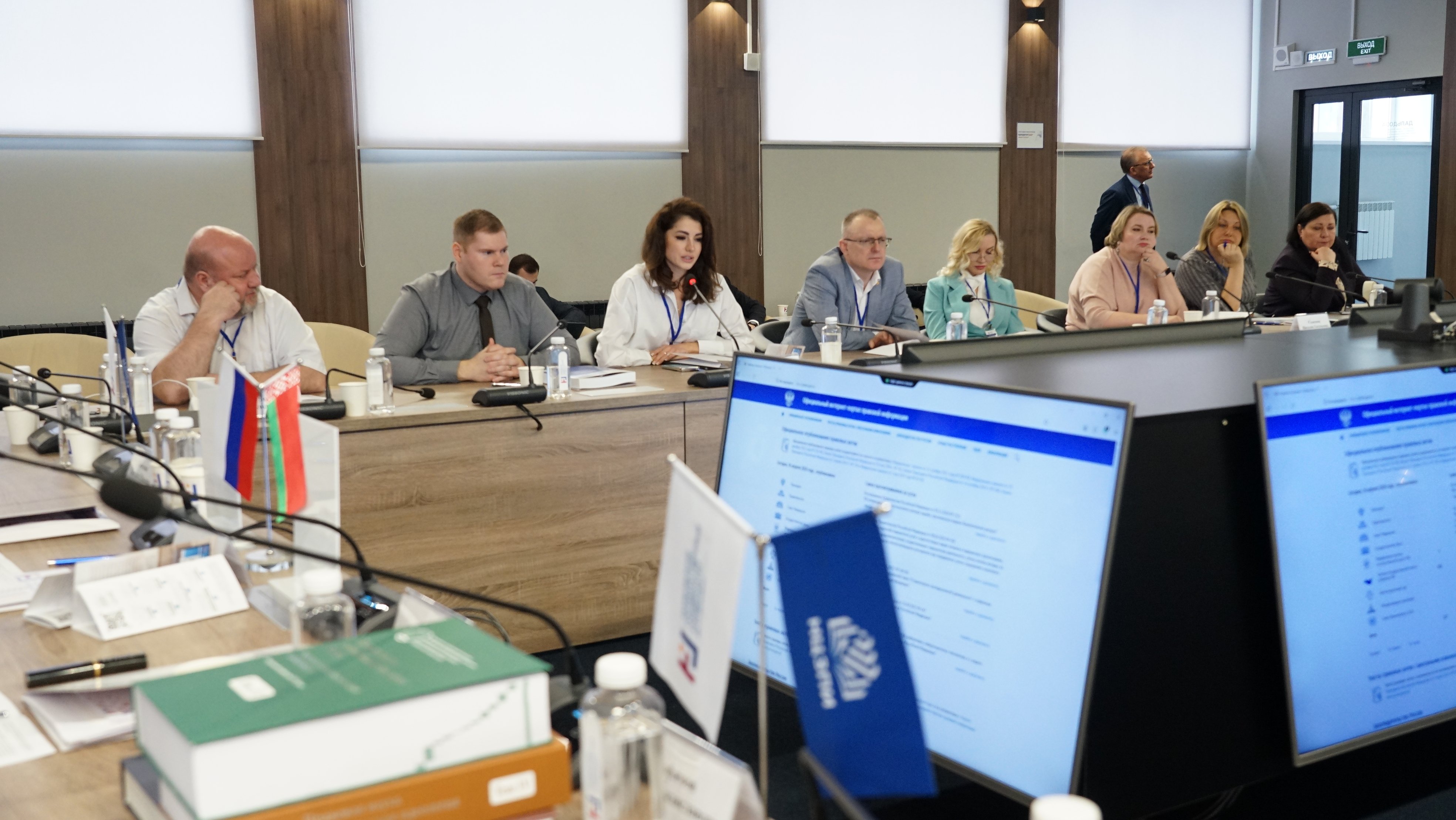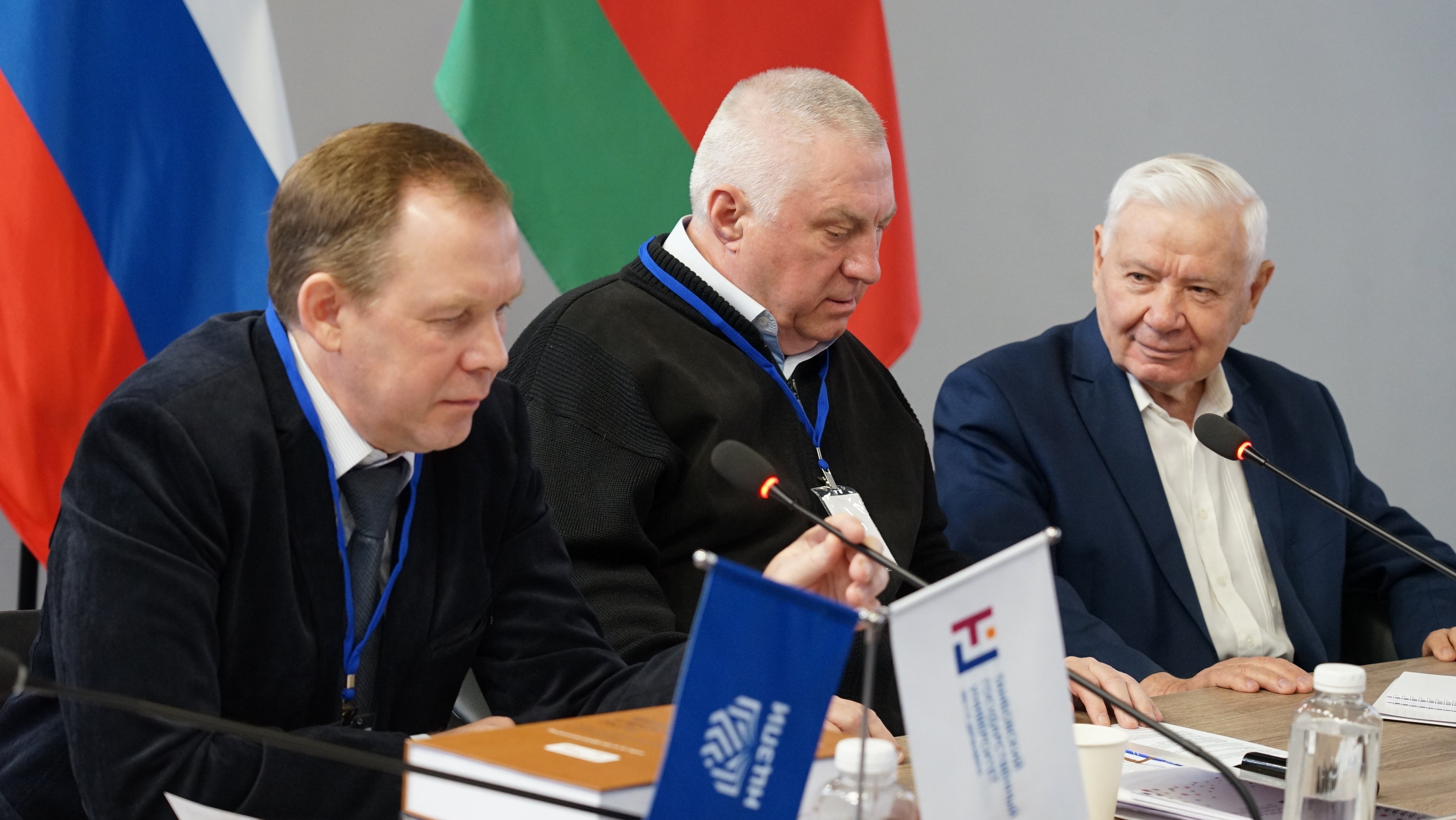
Derzhavin University hosted an international academic conference in the form of a roundtable discussion, "The Current Vector of State and Legal Research: Contemporary Legal Policy in the Union State (Interstate, State, and Regional Levels of Formation and Implementation)."
The scale of the academic event is evidenced by the range and professional level of its participants: in addition to legal scholars from Derzhavin University, the Russian side was represented by scholars from MGIMO, the All-Russian State University of Justice, and scientific and educational organizations from other regions of Russia. Our colleagues from the Union State represented Belarus and the country's leading universities – Belarusian State University, Yanka Kupala State University of Grodno, Baranovichi State University, Belarusian State University of Economics, and the National Center for Legislation and Legal Information of the Republic of Belarus.
The conference program included a roundtable discussion, a discussion platform, and a general meeting to summarize the conference's results. The conference was attended by over 50 leading Russian and Belarusian scientists—honored scientists, doctors, and candidates of science.
"Today's event brought together representatives of the scientific community, public authorities, faculty, graduate students, and undergraduates," said Pavel Moiseev, Rector of Derzhavin University. "This broad range of participants creates a space for meaningful professional dialogue on current issues of the Union State's current legal policy and its further development. Tambov State University named after G.R. Derzhavin is especially pleased to welcome the National Center for Legislation and Legal Information of the Republic of Belarus, with whom we are developing scientific, educational, and business cooperation. This international scientific roundtable on the Union State's legal policy is a form of scholarly reflection on this phenomenon and its development prospects. We are pleased that TSU named after G.R. Derzhavin is becoming a platform for such a representional scientific dialogue!"
The conference's main goal—a substantive discussion of the development and implementation of legal policy in the Union State created by Russia and Belarus at the current stage of its development in the context of interstate, state (for each of the Union states), and regional (for regions within the Union states) formats—was achieved.
The discussion participants drew on doctrinal and practical experience in developing and implementing legal policy as a model for addressing significant state and legal challenges. This was facilitated by reference to the theory of legal policy that has developed within the framework of legal scholarship in the recent history of Russia and Belarus, as well as by examining practical examples of the preparation, development, and implementation of legal policy documents. These primarily include the Concept of Legal Policy of the Republic of Belarus, the Concept of Legal Policy of the Republic of Kazakhstan, the Concept of State Legal Policy of the Irkutsk Region, and the draft Concept of Legal Policy of the Tambov Region.
During the exchange of opinions, the need for a balanced, systematic, and qualified scientific and practical approach to setting and implementing the goals and objectives of state and legal development was emphasized. This envisions a legal policy format, the implementation of which becomes a determining factor in the adequate response of political entities (states, state unions, and regions of states) to existing and potential geopolitical, military, economic, demographic, environmental, and other challenges and threats.
It was particularly emphasized that the development of the Union State, the states of Russia and Belarus, and the internal regions of these states must be based on a scientifically substantiated state and legal strategy and tactics, as well as targeted legal policies at the appropriate levels of formation and implementation. At the same time, scholars have identified problems that exist in the current reality and interfere with the formation and implementation of this type of legal policy. This was discussed, among other things, at a special discussion forum, "State and Legal Policy in the Sphere of Innovative Development of Agro-Industrial Complexes within the Union State: the Experience of Russia and Belarus."
— Tambov State University named after G.R. Derzhavin, very timely became a platform for the discussion of such significant issues of a scientific and legal nature, - comments the director of the scientific and educational center "State and Legal Policy of Modern Russia" of Derzhavin University, Honored Scientist of the Russian Federation, Doctor of Law, Professor Alexander Malko. "In today's geopolitical conditions, only within the framework of union relations can we expect relative security and opportunities for sovereign state development. The discussion platform dedicated to the development of agro-industrial complexes within the Union State deserves special mention. Derzhavin's legal scholars have won a grant from the Russian Science Foundation for the next two years on state and legal policy in the Russian agro-industrial complex. The authoritative discussion of these issues within the discussion platform provided additional scientific groundwork for the implementation of the grant.
The conference was preceded by a ceremonial opening at Tambov State University named after G.R. Derzhavin. The Derzhavin Center for Standard Legal Information will be held as part of a special information and educational project of the National Center for Legislation and Legal Information of the Republic of Belarus. The Center will provide Russian users with access to up-to-date official legal information from the Republic of Belarus and the Union State, which is crucial for supporting the information and legal support of the partnership between Russia and Belarus, which is developing in various areas of public life.
The results of the scientific event will be published in the scientific publication "State and Legal Studies" and, as part of a review of the event, in the journal "State and Law" (Scopus, RSCI, VAK, RINTS).