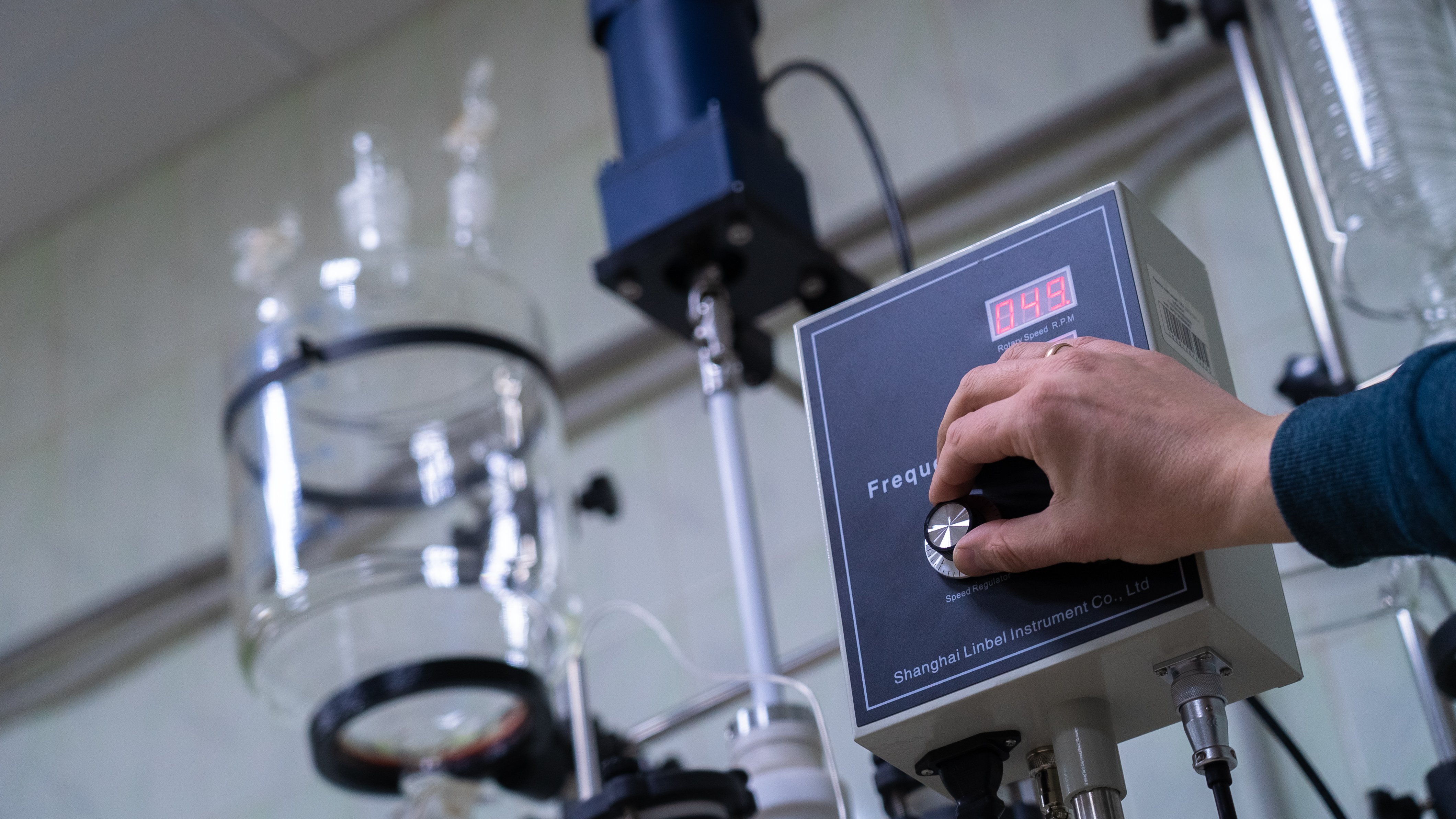
At the international exhibition "Chemistry-2023" scientists from Derzhavin Tambov State University presented new resins for adhesive compositions. Scientists developed them at the Laboratory of Organic Synthesis and Macromolecular Compounds of Derzhavin University. Applied research and development of the Laboratories are designed to help preserve the health and improve the quality of life of millions of people - to radically reduce the amount of harmful substances that are emitted by objects surrounding a person in everyday life and at work. Phenol-formaldehyde, melamine-formaldehyde, urea-formaldehyde and other resins are used for the production of plywood and OSB, fiberglass and laminate, mineral heat- and sound-proofing boards. Most of the furniture that fills apartments and offices consists of the familiar chipboard. It is a mixture of some filler (mainly wood chips) with glue. Nowadays, significant volumes of chipboard are produced using urea resins, and such resins are very unstable to hydrolysis - decomposition under the influence of moisture - which leads to an increase in the release of formaldehyde. Phenol-formaldehyde resins are more moisture resistant; however, they are also a source of formaldehyde and phenol emissions into the environment. These two compounds have an extremely negative effect on human condition and health, including having a carcinogenic effect. The most important task of chemists at Derzhavin University is to minimize the release of harmful substances from resins. According to Alexey Abramov, the goal of another project is to create a new phenol-formaldehyde resin that would meet the most stringent health requirements. The equipment and operation of the Laboratory of Organic Synthesis and Macromolecular Compounds is carried out within the framework of the strategic project of Derzhavin University “New Chemical Products and Technologies”. This is one of the university projects that received support under the Priority 2030 program.
Photogallery
1/1
—