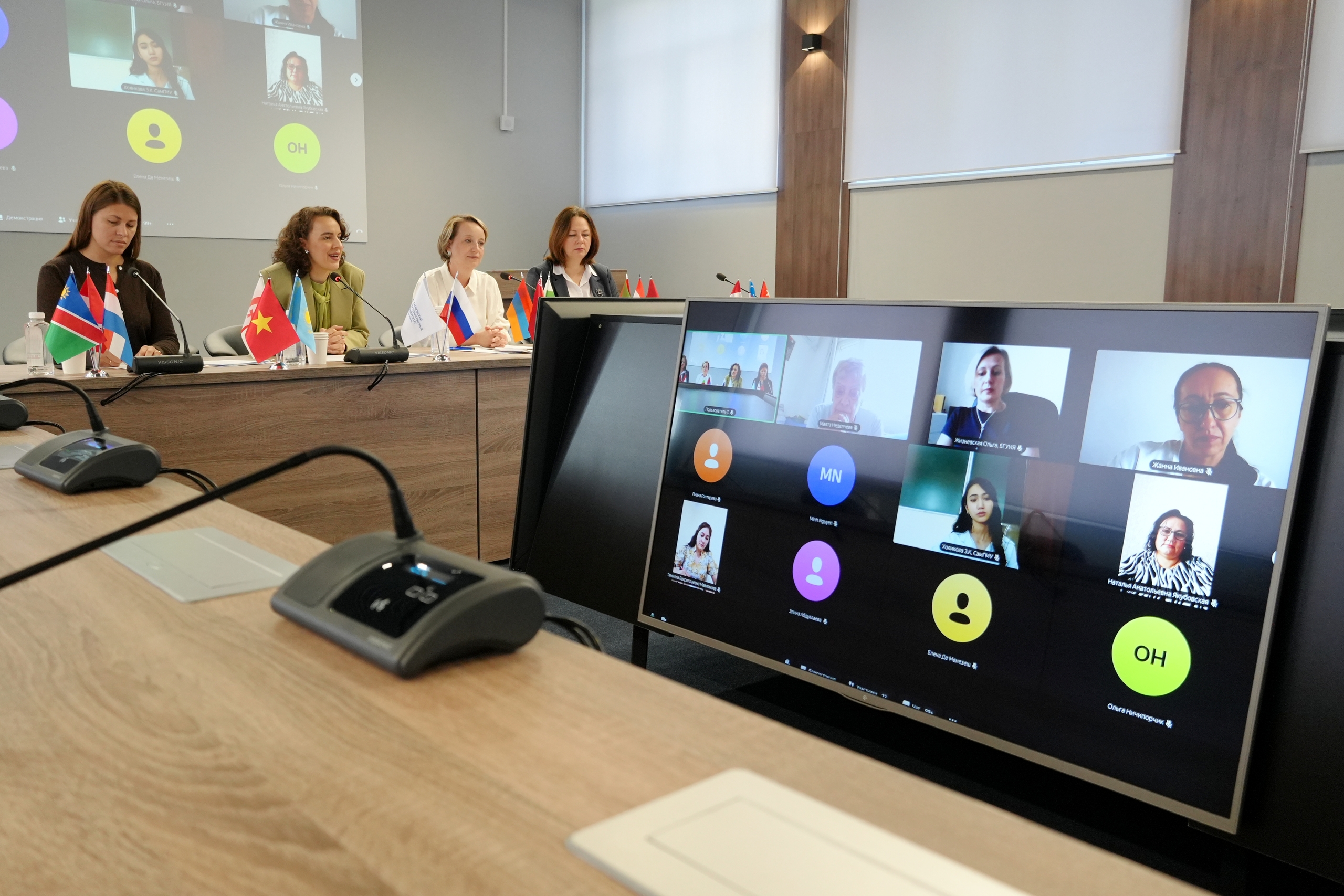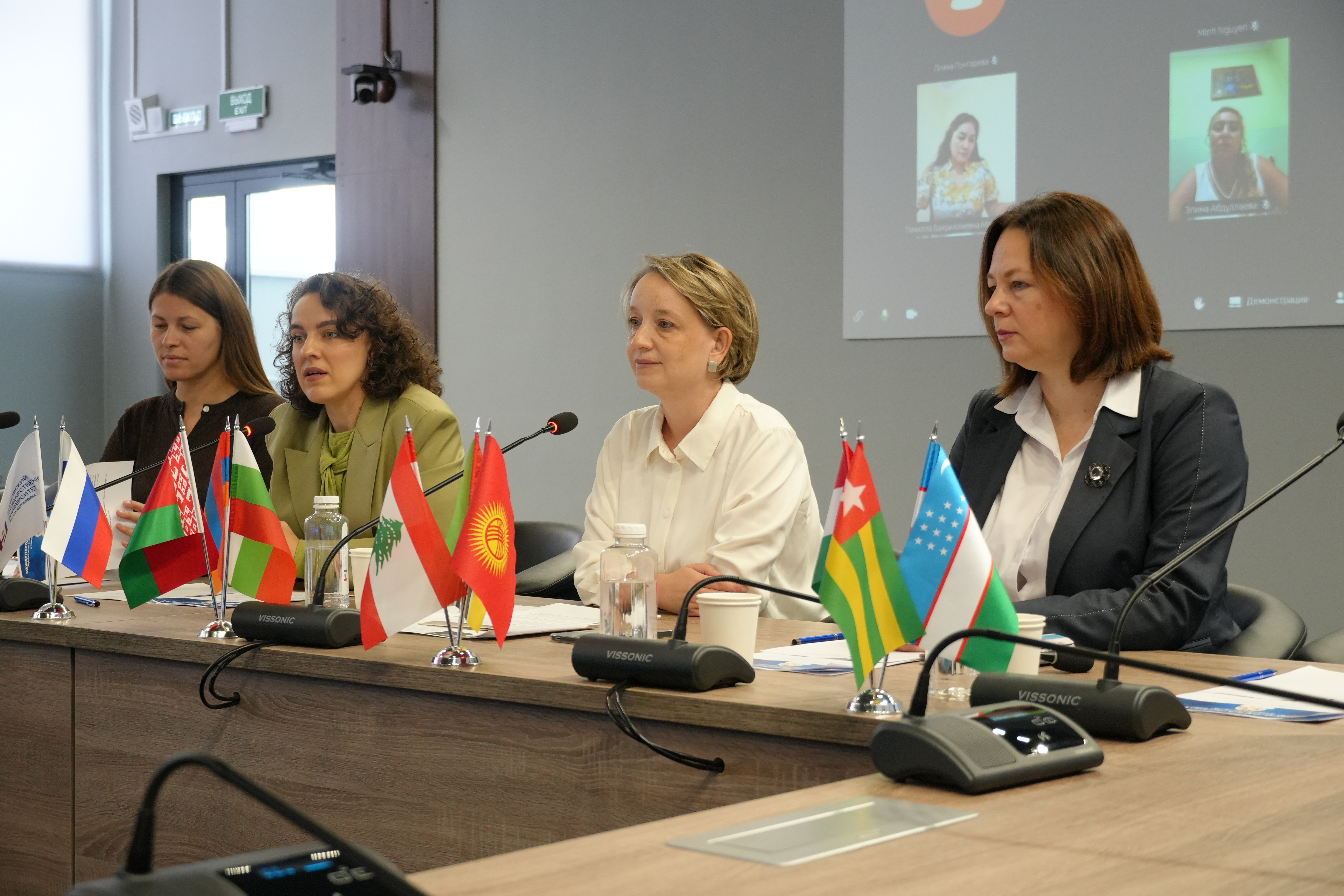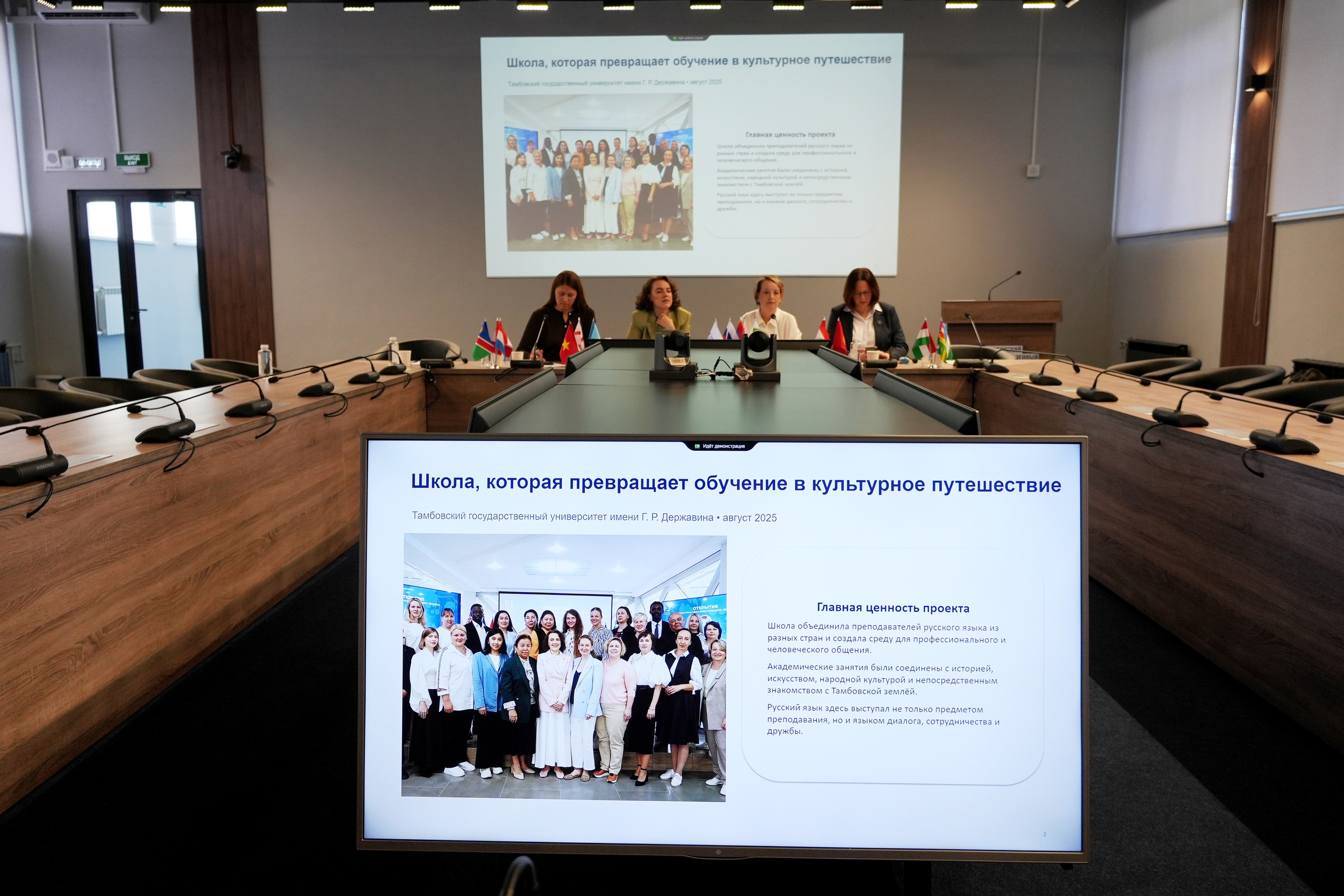
A roundtable discussion, "The Russian Language in the International Space: Significance and Development Prospects," was held at Derzhavin University, concluding the third season of the cultural and educational project "International Methodological School of Russian Language and Russian Folk Culture." The discussion brought together experts from leading universities in the Russian Federation and teachers of Russian as a Foreign Language (RFL) from Belarus, Uzbekistan, Kazakhstan, Kyrgyzstan, Tajikistan, Georgia, Bulgaria, Egypt, Vietnam, and the Netherlands.
The Russian Language School is of strategic importance in strengthening international cooperation and promoting the Russian language abroad. The project, initiated by Pavel Moiseev, Rector of Derzhavin University, was first implemented in 2024 and has received recognition among the professional community.
"The Russian language is our treasure. Interest in its study grows every year." This year, 42 representatives from 17 countries participated in the International School of Russian at Derzhavin University, noted Elena Zueva, Vice-Rector for International Affairs at Derzhavin University. We are seeing a huge demand for teachers of Russian as a foreign language. The need for Russian language learning is particularly strong in African countries, and we consistently support language training centers that teach Russian. As part of the School, we presented to the participants a new development by our university's researchers: the manual "About Russia in Russian." Published in 2020, it is now used in 20 countries and helps tens of thousands of students around the world learn Russian.
At the roundtable, participants shared best practices in teaching Russian abroad. Alexandra Olkhovskaya, Head of the Lexicography Laboratory and PhD in Philology at the A.S. Pushkin Russian Language Institute, presented a report titled "The Russian Language in a Global Dimension: The Russian Language Position Index in the World Project." Dilaram Madaminova, Head of the Department of Teaching Methods of Russian Language and Literature at the Institute of Philology and Intercultural Communication at Osh State University and a participant in the 2025 School of Russian Language and Russian Folk Culture at Derzhavin University, spoke about the specifics of studying Russian in Kyrgyzstan, as well as its importance and prospects for its development in schools and universities.
In turn, Olga Dronova, Doctor of Philosophy and Head of the Department of Russian as a Foreign Language at Derzhavin University, shared her experience in developing students' motivation to learn Russian by developing linguacultural competence based on the experience of conducting international projects at the Department of Russian as a Foreign Language at Derzhavin University.
"There are educational projects that take on a new life after completion. For me, the International School of Russian Language at Derzhavin University became a launching pad that subsequently provided the opportunity to launch new projects," said Tamilla Mavlyanova, Head of the Department of Russian Language and Literature at the Samarkand State Pedagogical Institute (Republic of Uzbekistan). The School of Russian as a Foreign Language brought together representatives from different countries, scientific and pedagogical schools, and cultural traditions. Thanks to the atmosphere of trust and professional dialogue, all boundaries between us were erased, and we became a united team.
The event's program was very comprehensive. Participants met with leading experts, listened to lectures on Russian painting by art historians from the Tambov Regional Art Gallery, the history of Atmanovsky kulachki, and attended master classes on Russian folk crafts.